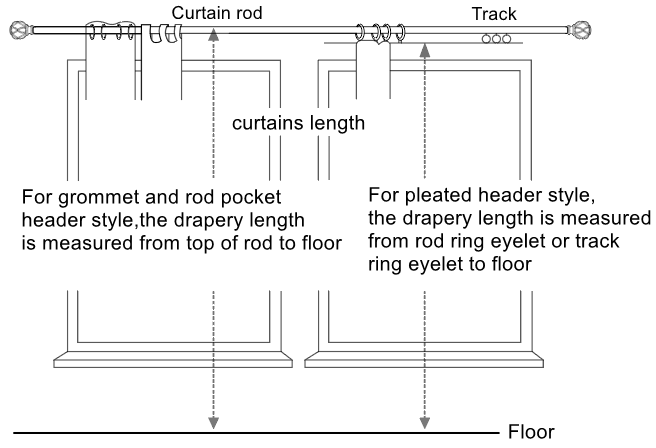











The header you choose determines how your custom curtains look, feel, and perform every day. This short guide focuses on real-world performance—smoothness, installation, and long-term shape—so you pick the right header the first time.
Real example: why looks can be misleading
We frequently see customers pick a header purely for appearance and later regret it. One recent case involved a master bedroom blackout curtain: the customer chose a back tab header to hide the rod. After installation, the curtains were heavy, stiff, and extremely difficult to open and close—turning what was meant to be an elegant curtain into a daily frustration.
The lesson: Some headers are fine for decorative or lightweight uses, but not for daily operation with medium-to-heavy fabrics.
What really matters when choosing a header

- Smoothness: How easily the curtain glides when opened or closed.
- Durability: Whether the header supports weight and keeps its shape over time.
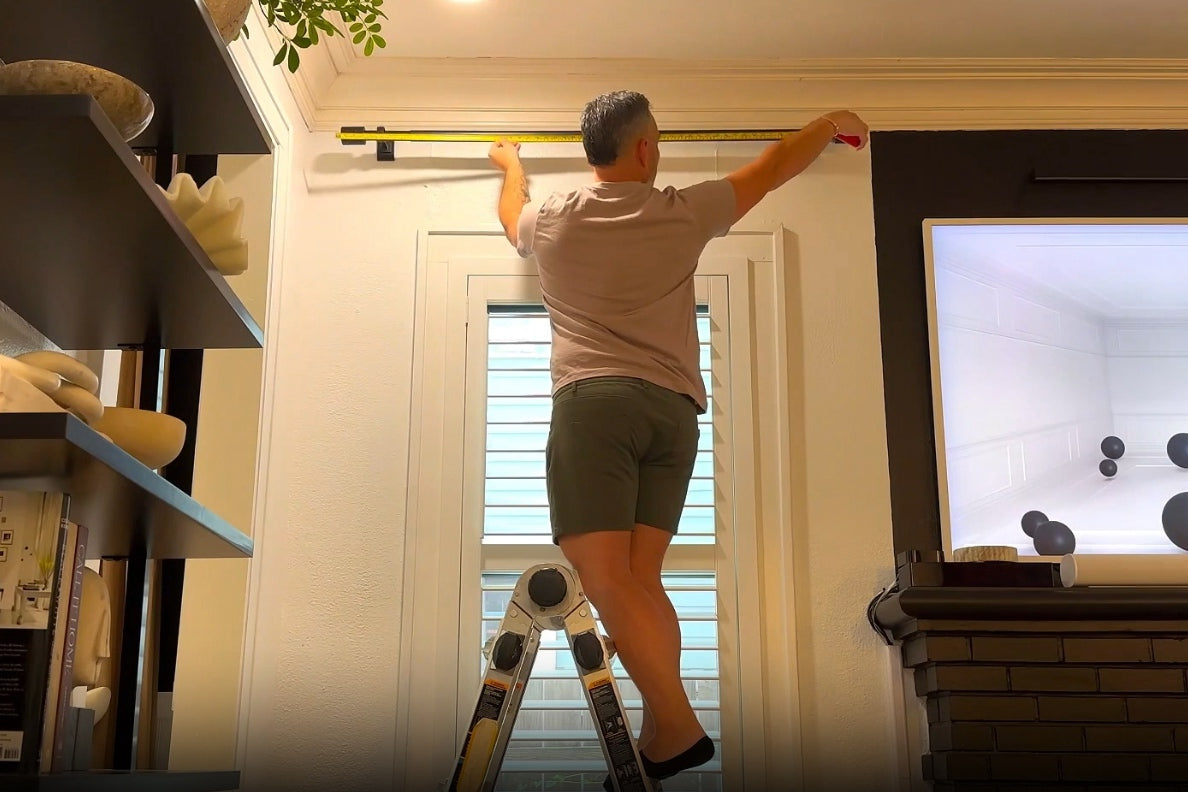
- Installation complexity: Some headers require hooks, carriers, or professional setup.
- Memory training compatibility: Whether the header can be engineered to hold crisp folds long-term.
Practical performance rankings
Smoothness ranking (real-use):
- Pleated headers (best)
- Ripple/S fold header
- Grommet header = Flat panel = Goblet header
- Back tab, Rod pocket, Tab top, and similar styles (not recommended for daily use)
Installation difficulty:
- Pleated header — most complex (hooks, carriers, accurate spacing)
- Other headers — generally easier and more DIY-friendly
Memory training (ability to hold crisp folds):
- Supported: most structured headers (pleated, ripple fold, grommet, flat panel)
- Not supported: back tab, rod pocket, goblet
How to choose—quick decision guide
If you open and close curtains daily

Choose pleated headers for the smoothest performance. Ripple fold is a strong alternative for track systems.
If you prefer a modern, uniform look

Choose ripple/S fold on a track for consistent waves and easy stacking.
If you want simple rod-mounted installation

Grommets or rod pocket are quick and work well with light-to-medium fabrics.
If you want to hide the rod but still use the curtains daily
Avoid back tab and rod pocket for heavy, frequently used curtains. Instead, use pleated headers on a track or a ripple fold behind a pelmet to hide hardware while keeping function.
Short summary — the practical takeaways
Smoothness ranking: pleated header > ripple/S fold header > grommet header = flat pane. All other headers are not recommended — they are very, very difficult to pull.
Installation difficulty ranking: pleated header > other headers.
Memory training: All common headers can be memory-trained except back tab, rod pocket, and goblet headers.