




Installing a curtain rod may look straightforward, but bracket placement, wall material, and mounting method all affect the finished result. A rod mounted too low or too narrow can make a window look cramped. The wrong fasteners may loosen over time, cause the rod to sag, or damage the wall.
This matters even more when you are hanging heavier curtains. Before choosing a curtain rod, check the rod’s weight capacity as well. This guide covers the tools, measurements, bracket placement, and installation methods you need for several common wall types.
A useful starting point is to place curtain rod brackets 4 to 8 inches above the window frame and extend the rod 6 to 12 inches beyond each side. Adjust these measurements for the ceiling height, window width, curtain stackback, and rod weight capacity. Before drilling, identify the wall type and choose screws or anchors suited to the wall and the total weight of the window treatment.
Before You Begin: Identify Your Wall Type
Drywall is the most common interior wall surface in many U.S. homes, but there may be either wood studs or metal studs behind it. The right way to secure a curtain rod depends not only on the visible wall surface, but also on the supporting structure behind it.
Besides drywall, you may encounter the following mounting surfaces in American homes:
| Wall or Mounting Surface | Common Setting | Typical Mounting Method |
|---|---|---|
| Drywall with wood studs | Most modern single-family homes | Mount into the wood studs when possible; otherwise, use drywall anchors rated for the expected weight |
| Drywall with metal studs | Apartments, multifamily homes, and some newer buildings | Use fasteners designed for metal studs or hollow walls |
| Plaster and lath | Older homes | Drill pilot holes slowly, locate studs when possible, and avoid hammering that may crack the plaster |
| Brick, concrete, or masonry | Basements, apartments, lofts, or exterior walls | Use a masonry bit and anchors designed for the specific material |
| Solid wood or wood trim | Solid wood window casing or wall paneling | Drill pilot holes and use suitable wood screws |
| Tile or stone | Bathrooms, kitchens, or stone accent walls | Use the correct specialty bit; consider professional installation because these surfaces can crack |
If you are not sure what is behind the wall, a stud finder can help locate the framing. Before drilling, also consider the possibility of electrical wiring, plumbing, or structural components above the window. Do not choose the mounting method based only on the visible surface.
Step 1: Gather Your Tools and Hardware
Before you begin, gather a tape measure, pencil, level, step ladder, drill or screwdriver, and the brackets, screws, and wall anchors supplied or selected for your curtain rod.
A wider curtain rod may also need a center support bracket. Follow the rod manufacturer’s instructions for maximum span and weight capacity.
When hanging extra-wide velvet curtains, heavyweight faux-linen curtains, or heavy lined curtains, the fasteners need to support the combined weight of the curtains, rod, rings, and other hardware.

Step 2: Measure Your Window and Confirm Curtain Size
How to Measure for a Standard Curtain Rod
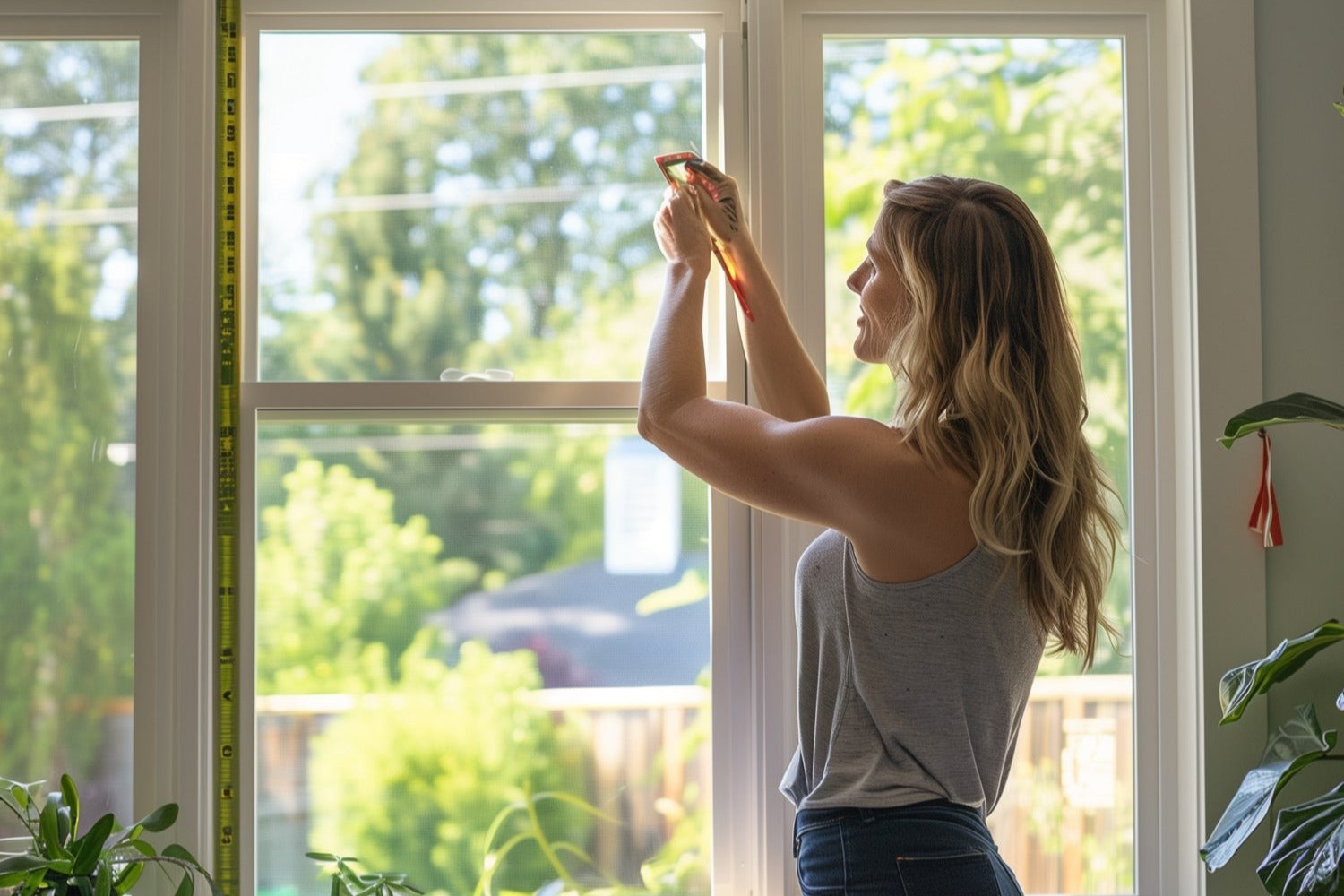
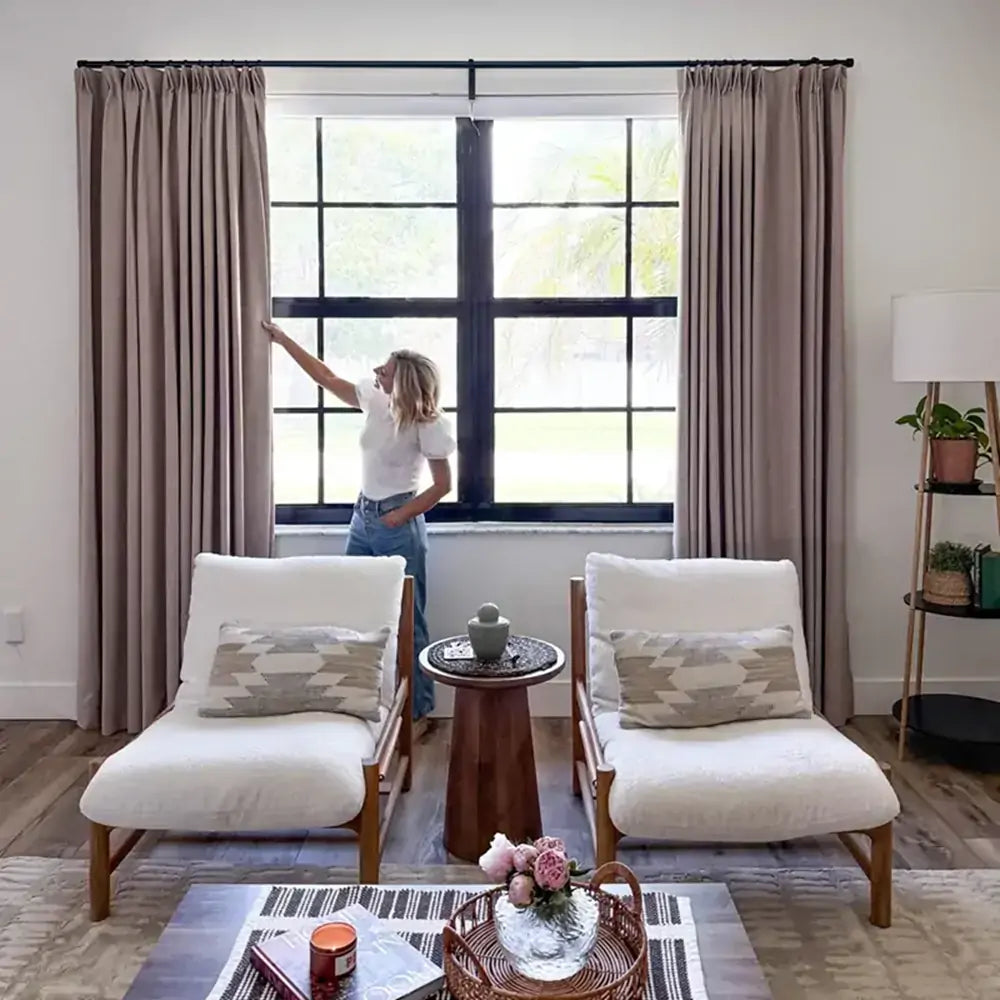
Start by measuring the full width of the window frame. Then decide how far the curtain rod should extend beyond each side. For most standard windows, extending the rod about 6 to 12 inches on each side is a practical starting point.
This extra width gives the curtain panels room to stack neatly beside the window when open. More of the glass remains visible, and the window appears wider.
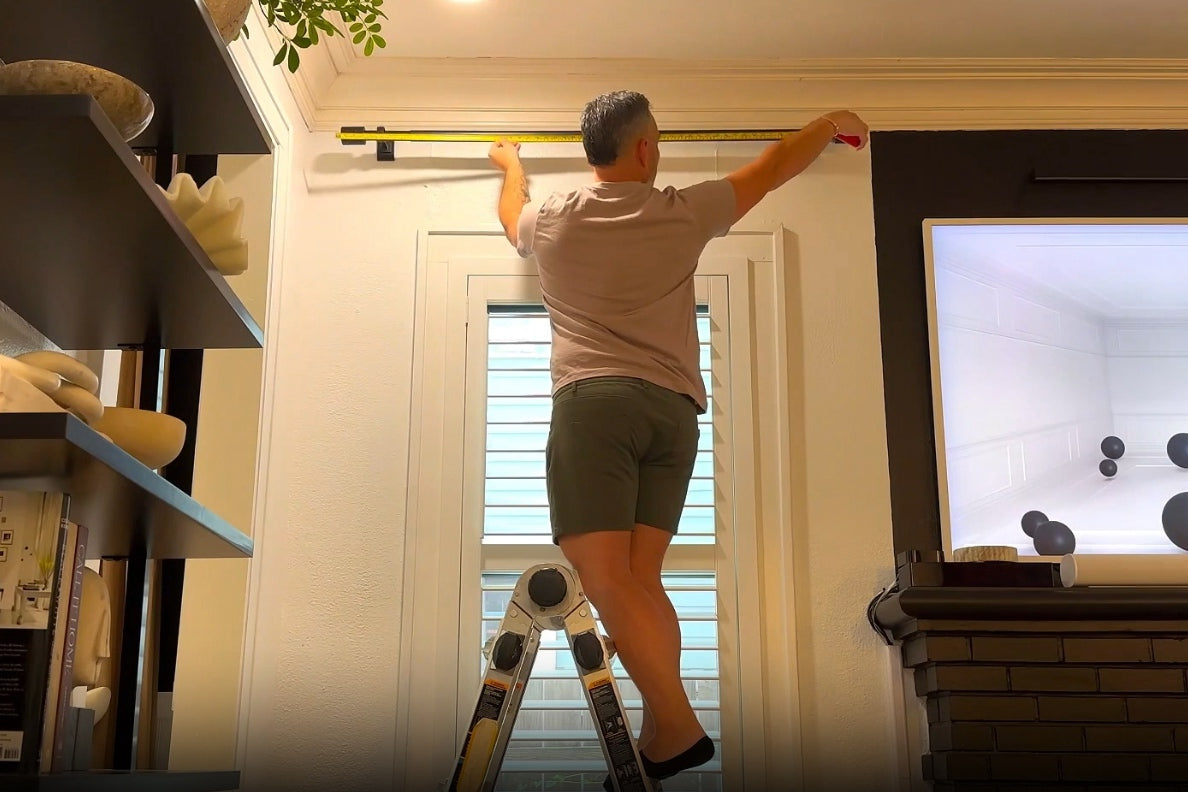
Curtain rod brackets are often mounted about 4 to 8 inches above the window frame. In a room with higher ceilings, the rod can be positioned closer to the ceiling or crown molding to make the window look taller.
Do not place the brackets too close to the window frame, or the open curtains may cover too much of the glass. At the same time, avoid extending the rod simply for the sake of making the window look wider. A longer rod places more demand on the brackets, connection points, and center supports.
Once you have chosen the position, mark both brackets with a pencil and use a level to make sure the marks are even. Wide windows, sliding glass doors, and heavier curtains may require one or more center support brackets to prevent the rod from sagging over time. Follow the rod manufacturer’s recommendations.
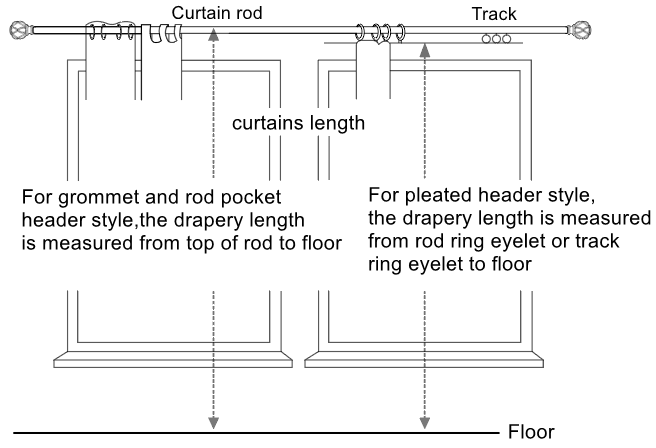
If you already have your curtains, the rod position should also account for the finished curtain length. Common floor-length finishes include curtains that just touch the floor, hover about half an inch above it, or create a slight puddle. Choose the look you want, then use the finished length to determine the bracket and rod height.
You can also install the curtain rod first and then order curtains based on the finished mounting height.
Refer to the IXACurtians Measurement Guide, or use the Measurement Finder to confirm the width and length you need to order.

Bracket Placement Guidelines for a Track System
Curtain track bracket spacing is not always the same as bracket spacing for a standard curtain rod. A wall-mounted track needs enough clearance between the curtain folds and the wall, windowsill, window handles, or existing blinds. A ceiling-mounted track requires a suitable supporting structure above the ceiling surface.
Follow the track manufacturer’s instructions when determining bracket spacing. Long tracks, corner tracks, and double-track systems usually need more mounting points than a standard curtain rod.
Step 3: Install Your Brackets
After marking the bracket positions, check the height, width, and level one more time. Before drilling, check the area for electrical wiring or plumbing. Then drill pilot holes and install the brackets using the method suited to your wall type.
How to Install Curtain Rods in Drywall
The most secure way to install curtain rods in drywall is to drive the screws into wood studs behind the wall. If the ideal bracket position does not align with a stud, use drywall anchors rated for the expected load.
If the drywall is supported by metal studs, ordinary wood screws will not provide a reliable hold. Use fasteners designed for metal studs or hollow walls. Small plastic drywall anchors are generally not suitable for supporting heavy custom curtains.
How to Install Curtain Rods With Anchors
Drill the hole to the size specified for the anchor. Insert the anchor so it sits properly in the wall, then secure the curtain rod bracket with the appropriate screw.
A hole that is too large can weaken the anchor’s grip. A hole that is too small may damage the anchor or the wall. Installation methods and load ratings vary, so always follow the instructions provided with the anchors.
Installing Curtain Rods on Plaster, Brick, or Concrete
When installing a curtain rod on a plaster-and-lath wall, drill pilot holes slowly and avoid hammering the fasteners directly into the surface. Too much vibration can crack or loosen older plaster. When you can locate a stud behind the plaster, mounting the brackets into the stud is usually the stronger option.
Brick, concrete, and other masonry surfaces generally require a masonry bit and anchors made for the specific material. Stone and tile also require suitable drill bits and careful handling. If the curtains are heavy or you cannot identify the structure behind the surface, consider hiring a professional installer.
How to Install Curtain Rods Without Drilling
No-drill curtain rod installation may be useful in a rental, for a temporary room setup, or when drilling into the wall is not possible. These options are usually better suited to lighter curtains and shorter spans.
A tension rod installed inside the window frame can work for sheer curtains, small windows, or café curtains. No-drill brackets that attach to window trim require a compatible and secure wood casing. Magnetic curtain rods only work on metal surfaces that attract a magnet.
Adhesive brackets also depend on the wall surface and the product’s rated capacity. They are usually not suitable for heavy blackout curtains, velvet curtains, or long custom curtain rods.
A no-drill installation is not appropriate for every window or curtain. Before choosing one, check the supported rod diameter, maximum span, and load rating.
Step 4: Hang Your Curtains
After the brackets are secure, install the curtains on the rod. Grommet curtains, rod pocket curtains, and some back tab curtains are usually threaded onto the rod before the rod is placed in the brackets. Pinch pleat curtains, including French pleats, are generally fitted with hooks and rings before being hung on the rod.
Once everything is in place, check that the rod is level and that the brackets remain secure. Open and close the curtains slowly several times. When open, the fabric should stack neatly and closely at both sides of the window. When closed, the folds should fall naturally from the heading to the hem.
If the fabric developed wrinkles during packaging or shipping, follow the care instructions before steaming it. Do not use a hot iron unless you know the fabric can safely tolerate the heat.
Common Curtain Rod Installation Mistakes
Curtain rod installation problems do not happen only during drilling.
-
Hanging the Curtain Rod Too Low
Hanging the rod too low can make the ceiling feel lower. A rod that is too narrow keeps the open curtains over the glass, while skipping a center support bracket can cause a wide rod to sag over time.
-
Choosing a Curtain Rod That Is Too Narrow
When the rod ends at the edge of the window frame or extends only slightly beyond it, the whole treatment can look cramped. Even when the curtains are fully open, they continue to cover part of the glass. The bare wall beside the window can also make the curtains feel disconnected from the rest of the room. The result looks undersized regardless of the window’s actual dimensions.

Common Curtain Rod Installation Mistakes to Avoid
Avoid these common mistakes when installing curtain rods:
- Hanging the rod too low
- Choosing a rod that is too narrow
- Using weak anchors for heavy curtains
- Installing brackets unevenly
- Choosing curtains that are too short
- Forgetting center support for wide windows
The right rod placement helps your custom curtains, window drapes, and curtain panels look more intentional and designer-inspired.
IXA Curtains, we create custom curtains that bring warmth, texture, and refined style to beautifully lived-in🔗 Shop the Collection at ixacurtains.com
FAQs
Can You Install a Curtain Rod Without Studs?
Yes. If the brackets do not align with wood studs, you can use wall anchors suited to the wall material and the total expected weight. Heavier curtains need a stronger mounting method and should not rely only on small plastic drywall anchors.
How High Should a Curtain Rod Be Above the Window?
About 4 to 8 inches above the window frame is a common starting point. The final height should account for the ceiling height, crown molding, finished curtain length, and the proportions you want to create.
How Far Should a Curtain Rod Extend Past the Window?
For many standard windows, extending the rod about 6 to 12 inches beyond each side is a useful starting point. Heavier curtains may need more stackback space, but a longer rod may also require additional support.
Do Wide Curtain Rods Need a Center Bracket?
A wide curtain rod will often need a center support bracket, but the requirement depends on the rod’s span, material, total curtain weight, and the manufacturer’s instructions.
Can Adhesive Brackets Hold Blackout Curtains?
Most adhesive brackets are designed for lighter curtains. Blackout curtains, velvet curtains, and lined custom curtains are usually heavier and are better supported by screws, suitable wall anchors, or mounting into studs.