


Choosing the right curtain length can completely change the look and feel of your home. Whether you are shopping for custom curtains, custom drapes, linen curtains, velvet curtains, or blackout curtains, one of the most common questions homeowners ask is:
Should curtains touch the floor?
The short answer is: yes, in most cases, curtains should touch the floor or come very close to it. Floor-length curtains create a polished, elegant, and designer-inspired look. However, the best curtain length depends on your room, window style, fabric choice, and the overall interior design effect you want to achieve.
In this complete curtain length guide, we’ll explain when curtains should touch the floor, when they should puddle, when they should hover above the floor, and how to choose the perfect curtain size for your living room, bedroom, dining room, nursery, patio doors, bay windows, and more.
Why Curtain Length Matters
Curtains are more than just fabric panels. They are one of the most important window treatments in a home. The right curtain length can:
- Make ceilings look taller
- Make windows appear larger
- Add softness and warmth to a room
- Improve privacy
- Enhance light control
- Make a space feel more luxurious
- Create a finished interior design look
On the other hand, curtains that are too short can make a room feel unfinished. This is especially true for living room curtains, bedroom curtains, and dining room curtains, where floor-length drapes usually look more intentional and elegant.
If you want a high-end, custom look, choosing the right curtain panel length is just as important as selecting the fabric, pleat style, color, and curtain rod.
Should Curtains Touch the Floor?
In most modern homes, curtains should either lightly touch the floor, float just above the floor, or slightly puddle on the floor(about 1/2").
The most popular curtain length styles are:
| Curtain Length Style | Best For | Look |
|---|---|---|
| Floating curtains | Modern homes, high-traffic areas | Clean and practical |
| Kissing the floor | Living rooms, bedrooms, dining rooms | Tailored and elegant |
| Breaking at the floor | Luxury drapes, formal rooms | Soft and relaxed |
| Puddling curtains | Romantic, traditional, luxury interiors | Dramatic and decorative |
For most homeowners, the safest choice is curtains that just touch the floor or “kiss” the floor. This gives your space a clean, custom, and expensive-looking finish.
Option 1: Curtains That Float Above the Floor
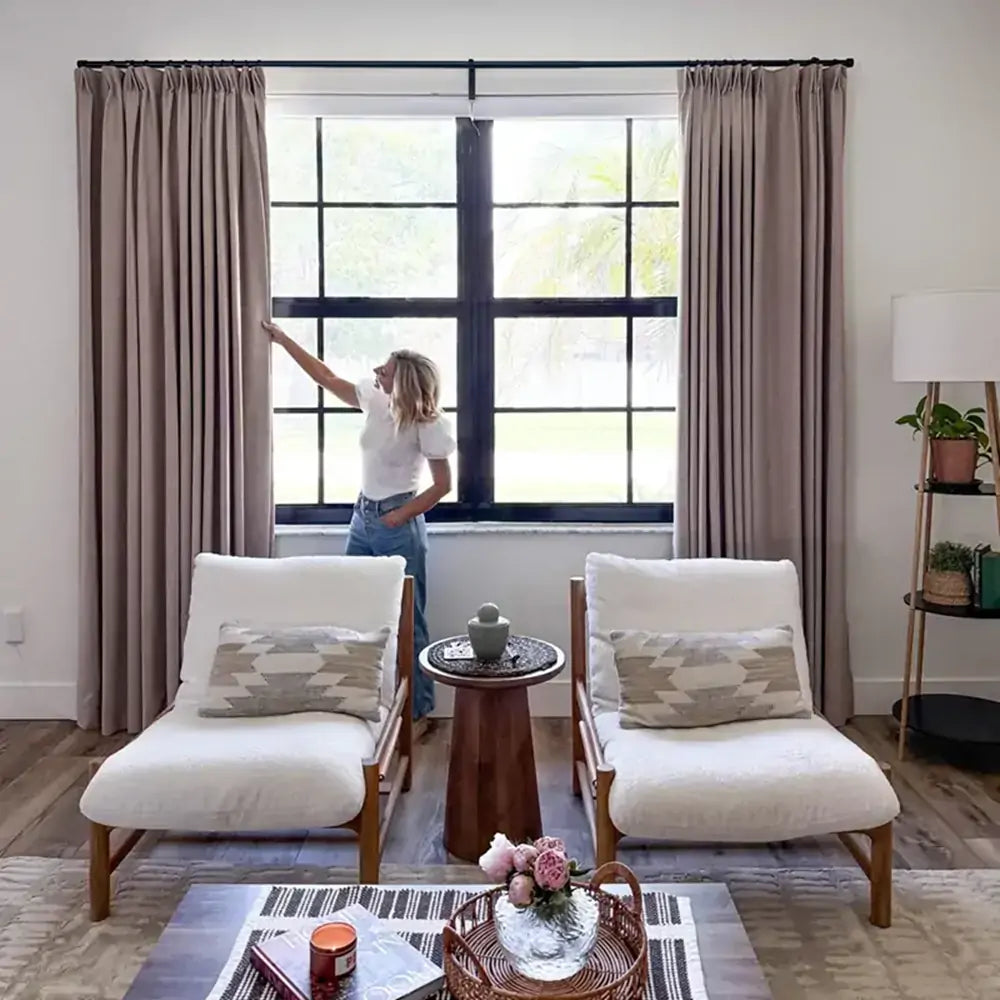
Floating curtains hang slightly above the floor, usually about ½ inch to 1 inch off the ground.
This curtain length is ideal if you want a neat, easy-to-maintain look. It also works well in rooms where curtains are opened and closed often.
Best for:
- Kids’ rooms
- Nursery curtains
- High-traffic living rooms
- Sliding glass door curtains
- Patio door curtains
- Homes with pets
- Robot vacuum-friendly spaces
- Modern minimalist interiors
- the inner layer of the double-layer curtains
Floating curtains are especially practical for blackout curtains, thermal curtains, and custom curtain panels that are used daily.
If you’re worried about fabric dragging, dust, or uneven floors, floating curtains are a smart option.

Click image to shop the same look
Option 2: Curtains That Just Touch the Floor
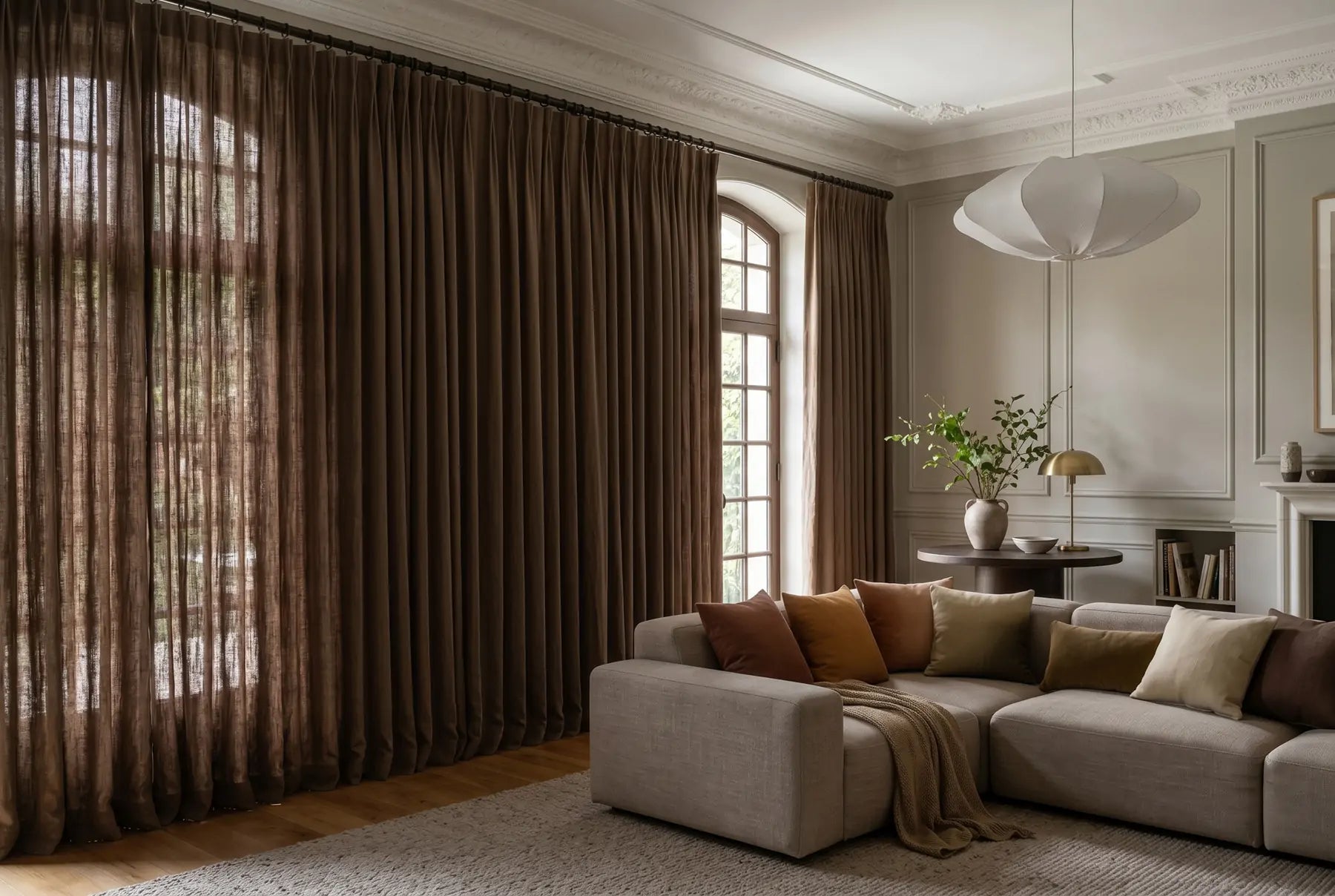
Curtains that just touch the floor are often considered the most classic and designer-approved option.
This style is sometimes called:
- Floor-touching curtains
- Floor-length curtains
- Curtains that kiss the floor
- Tailored curtains
- Full-length drapes
The fabric should meet the floor without bunching. This creates a clean vertical line that makes the room feel taller and more refined.
Best for:
- Living room curtains
- Bedroom curtains
- Dining room curtains
- Luxury curtains
- Custom drapes
- Pinch pleat curtains
- Linen curtains
- Velvet curtains
- Sheer curtains layered with blackout curtains
If you’re ordering custom size curtains, this is usually the most recommended length.
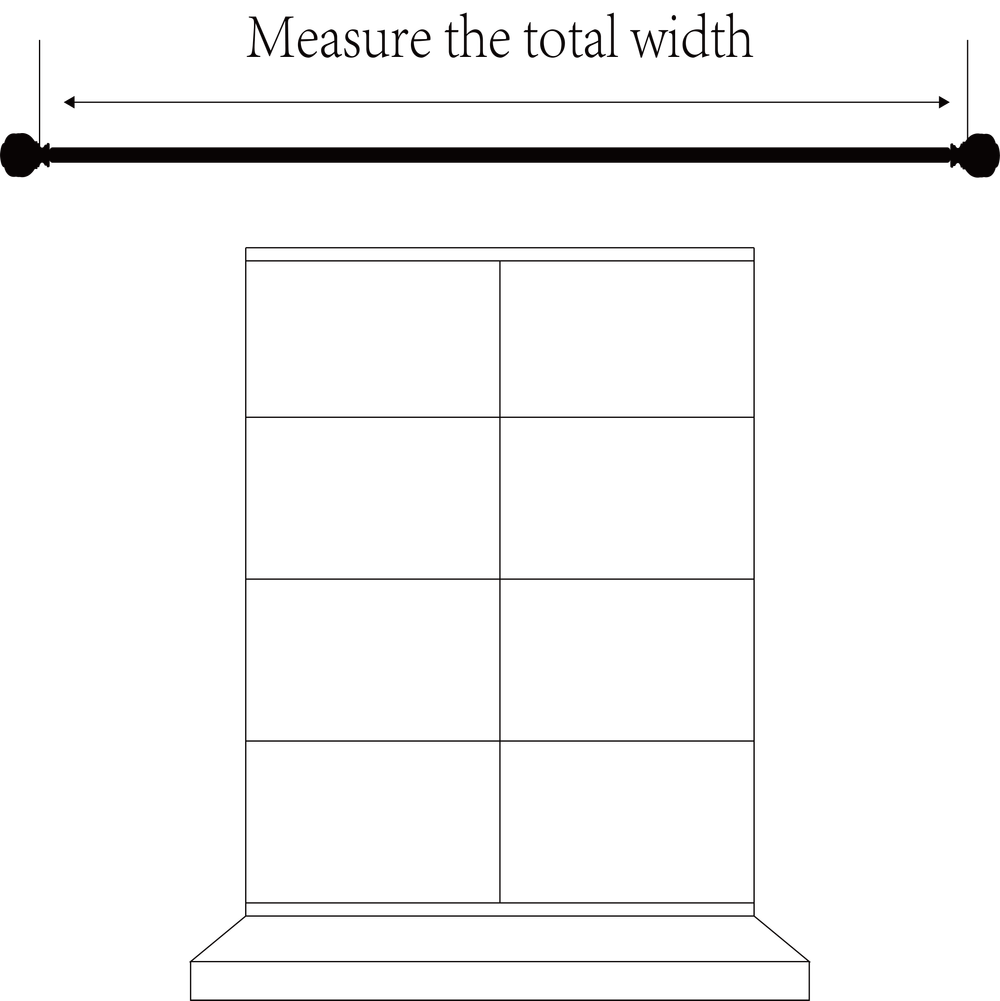
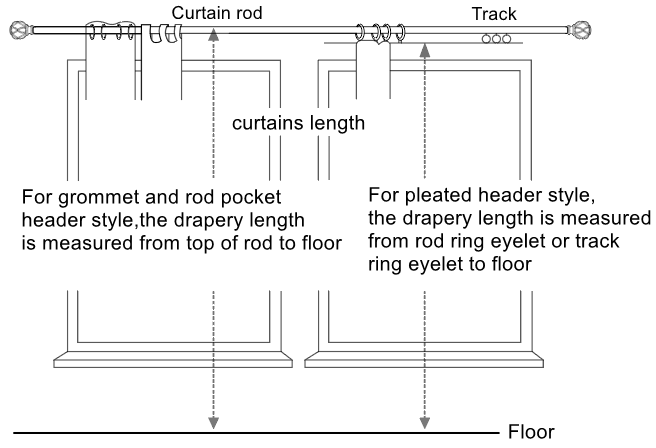
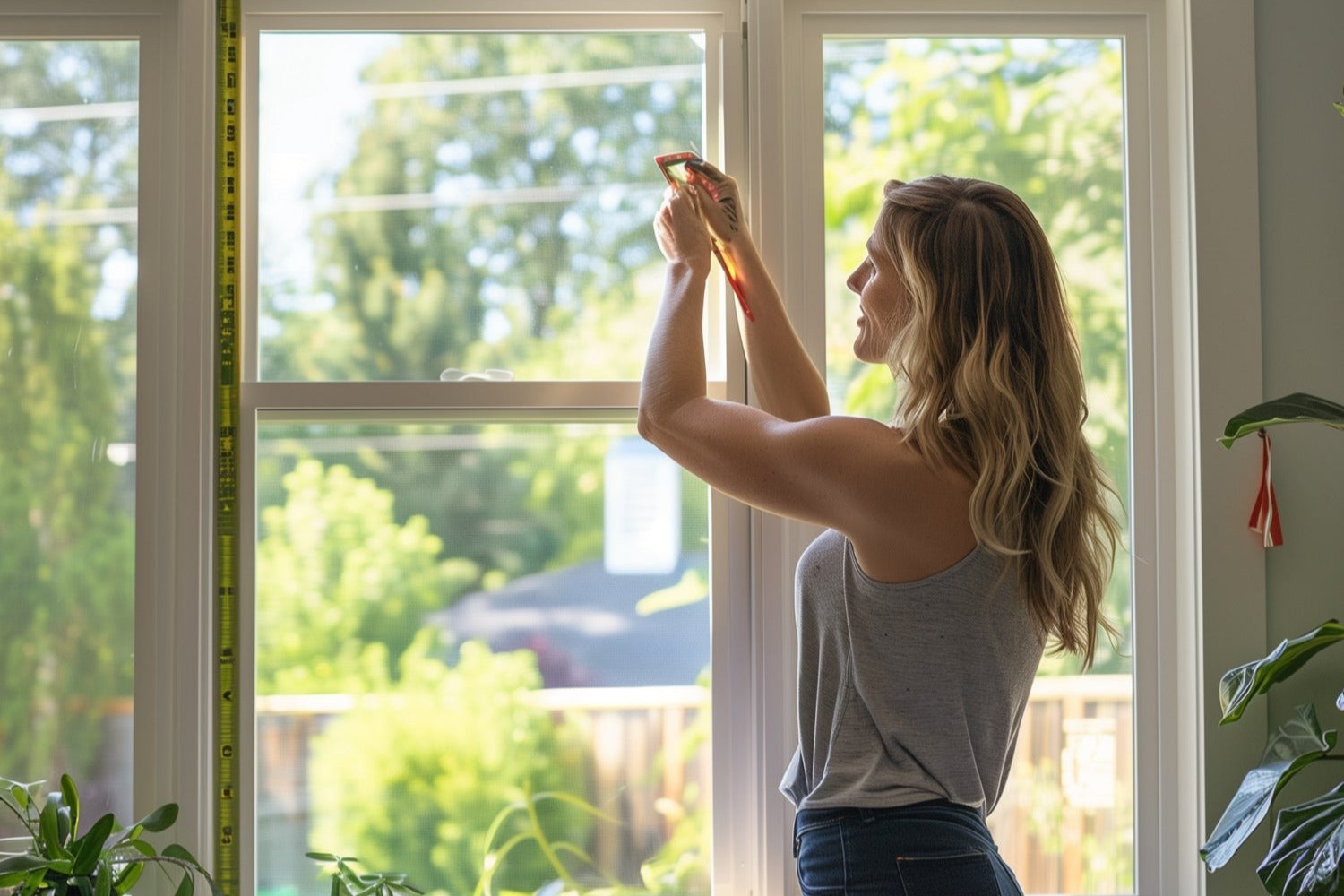
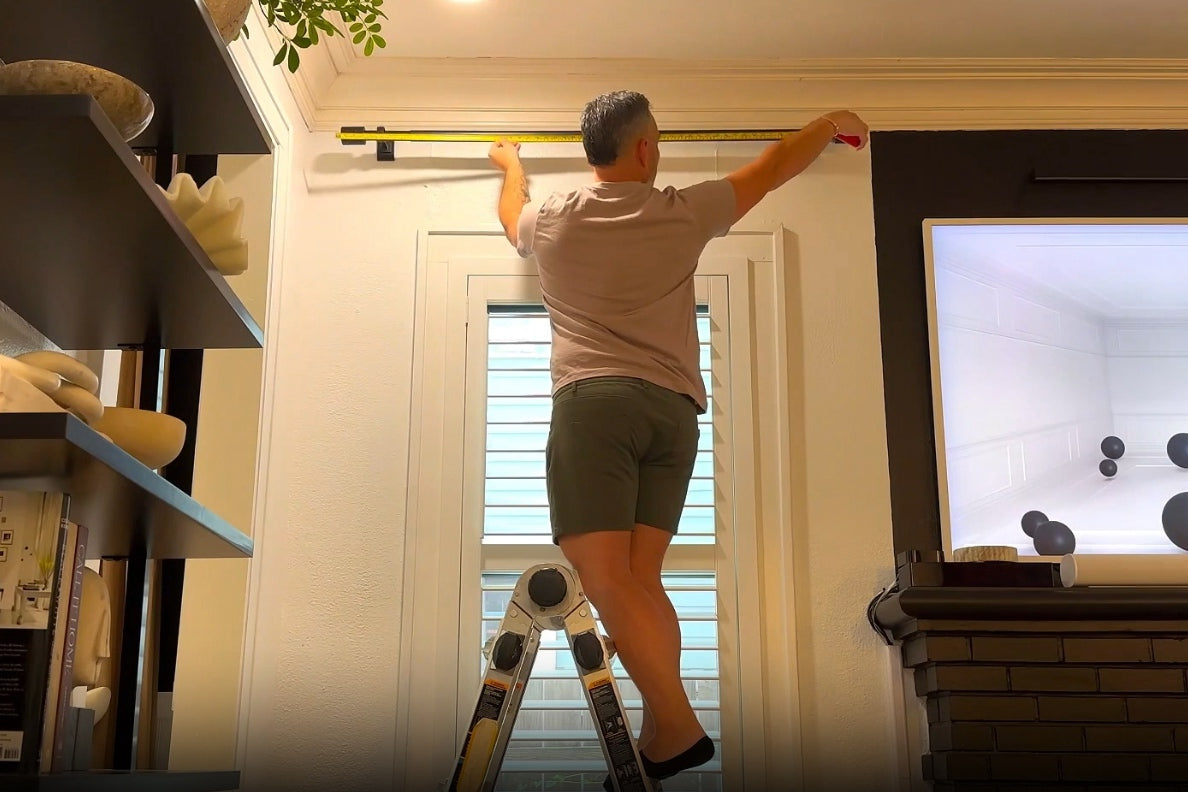
For example, if the distance from your curtain rod to the floor is 96 inches, your finished curtain length should be very close to 96 inches.However, the exact height depends on the curtain header style you choose, for instance, with Pinch Pleat styles, you should measure from the curtain rings to the floor, whereas for Grommet or Rod Pocket styles, you should measure from the top of the curtain rod to the floor. To obtain the most precise measurements, please use our "Measurement Finder" tool to calculate the exact curtain length based on your selected hanging method:
measurement-finder

Click image to shop the same look
Option 3: Puddled Curtains
Puddled curtains extend several inches onto the floor, creating a dramatic and romantic look. This style is often used in formal interiors, luxury bedrooms, and traditional homes.
There are different levels of curtain puddling:
| Puddle Length | Look |
|---|---|
| 1–2 inches | Soft break |
| 3–6 inches | Moderate puddle |
| 6+ inches | Dramatic puddle |
Best for:
- Formal dining rooms
- Luxury bedroom curtains
- Velvet drapes
- Silk curtains
- Traditional homes
- Romantic curtain ideas
- Decorative windows that are rarely opened
However, puddled curtains are not the most practical choice for every home. They collect dust more easily and can be harder to clean. If you have pets, children, or high-traffic areas, floating or floor-touching curtains may be better.

Click image to shop the same look
Why Choose Custom Curtains?
Choosing custom curtains is the best way to meet the different needs of each home when it comes to curtain height and size. Compared with ready-made curtains, custom curtains can be precisely tailored according to your window dimensions, ceiling height, curtain rod placement, and desired draping effect, allowing the curtains to truly fit your space.
Curtain height is the foundation of the overall aesthetic. Whether you want your curtains to float slightly above the floor, just touch the floor, fall naturally with a slight break, or create a more decorative puddled look, the right height directly affects the final appearance.
If the curtain height is not suitable — for example, if the curtains are too short, hang too far above the floor, or are too long without forming natural and beautiful folds — it can greatly damage the overall look. The room may appear unbalanced, less refined, or even feel as if the curtains were not installed properly.
With custom curtains, you can customize the exact length according to your preferred curtain height. You can also freely choose the width, fabric, lining, pleat style, and overall fullness. For non-standard window sizes, custom curtains are especially important. Well-made custom curtains can greatly enhance the overall quality and sophistication of your home décor.
Final Answer: Should Curtains Touch the Floor?
- If you want a clean and modern look, choose curtains that float about ½ inch above the floor.
- If you want a tailored designer look, choose curtains that just touch the floor(kiss the floor).
- If you want a soft and luxurious look, choose curtains that break slightly or puddle.
IXA Curtains, we create custom curtains that bring warmth, texture, and refined style to beautifully lived-in🔗 Shop the Collection at ixacurtains.com
FAQ Section
Should curtains touch the floor or window sill?
For living rooms, bedrooms, and dining rooms, curtains usually look best when they touch the floor. Sill-length curtains are more common in kitchens, bathrooms, or small windows.
Is it okay if curtains don’t touch the floor?
Yes. Curtains can float about ½ inch to 1 inch above the floor for a clean and practical look, especially in high-traffic areas or homes with pets.
How much should curtains puddle on the floor?
For a slight puddle, add 1 to 2 inches. For a more dramatic puddle, add 3 to 6 inches or more. Puddled curtains are best for decorative or formal spaces.
Should bedroom curtains touch the floor?
Yes, bedroom curtains usually look best when they touch the floor. Floor-length blackout curtains can also improve privacy and help block light for better sleep.
Should living room curtains touch the floor?
Yes, living room curtains should generally touch the floor or come very close to it. This creates a more elegant and finished look.
How far should curtains be off the floor?
If you prefer floating curtains, keep them about ½ inch above the floor. Avoid leaving several inches of space, as that can make curtains look too short.
What is the best curtain length for 8-foot ceilings?
For 8-foot ceilings, common curtain lengths include 84, 90, and 96 inches. The best size depends on how high you hang the curtain rod.
Are custom curtains worth it?
Yes, custom curtains are worth it if you want the perfect length, width, fabric, lining, and pleat style. They create a more tailored and high-end look than standard ready-made curtains.