

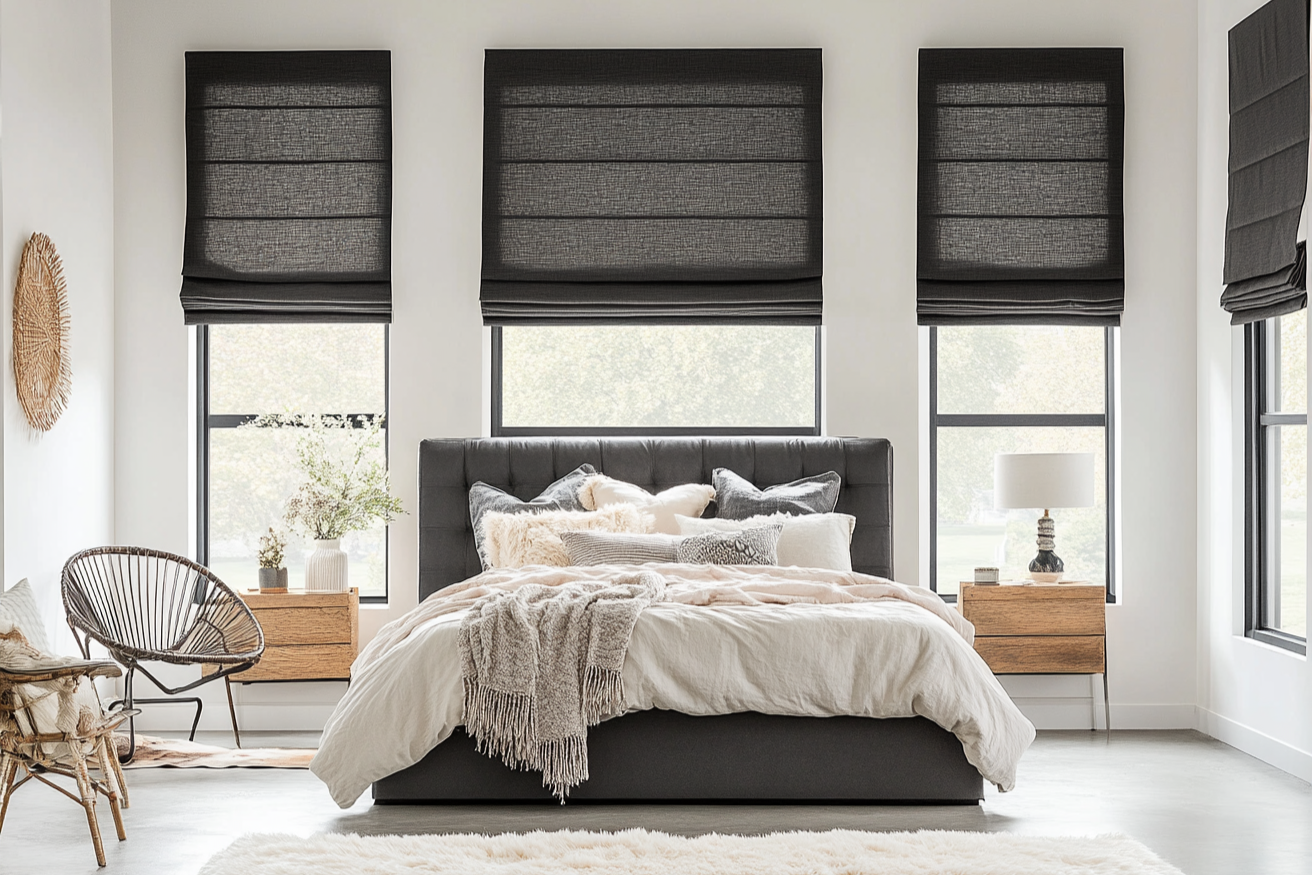
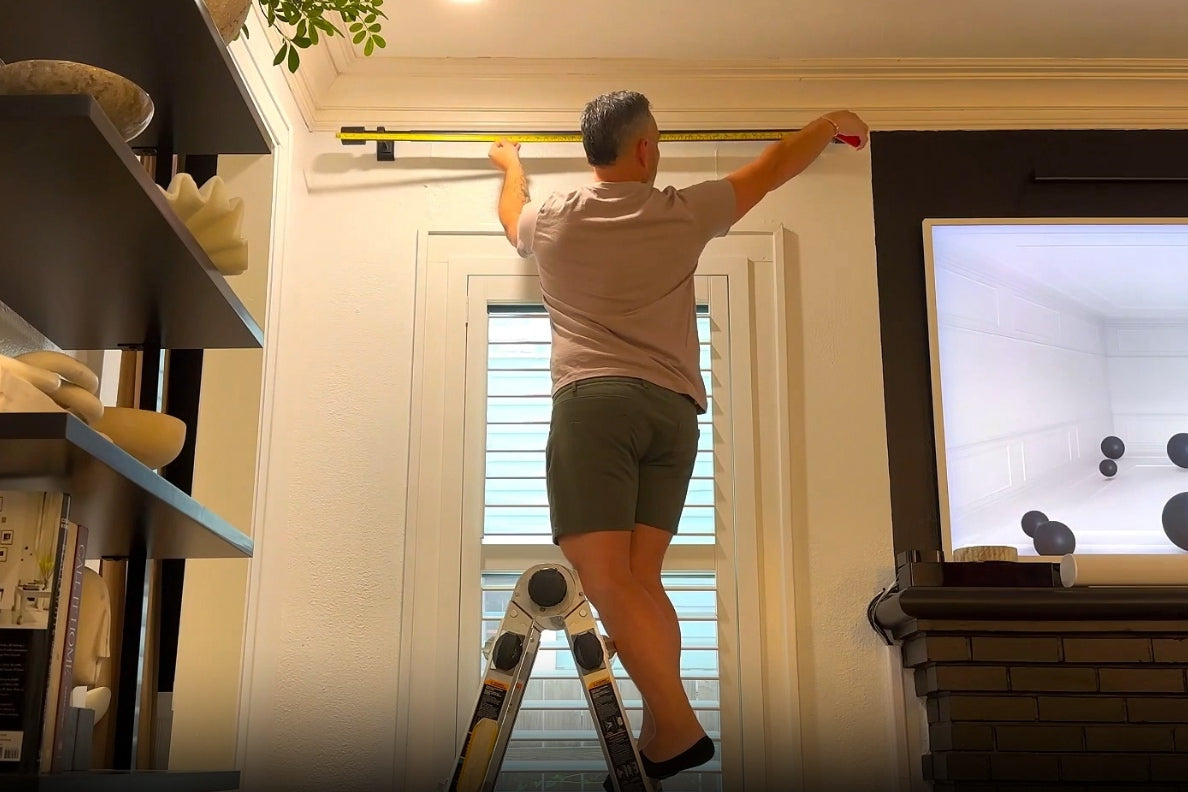
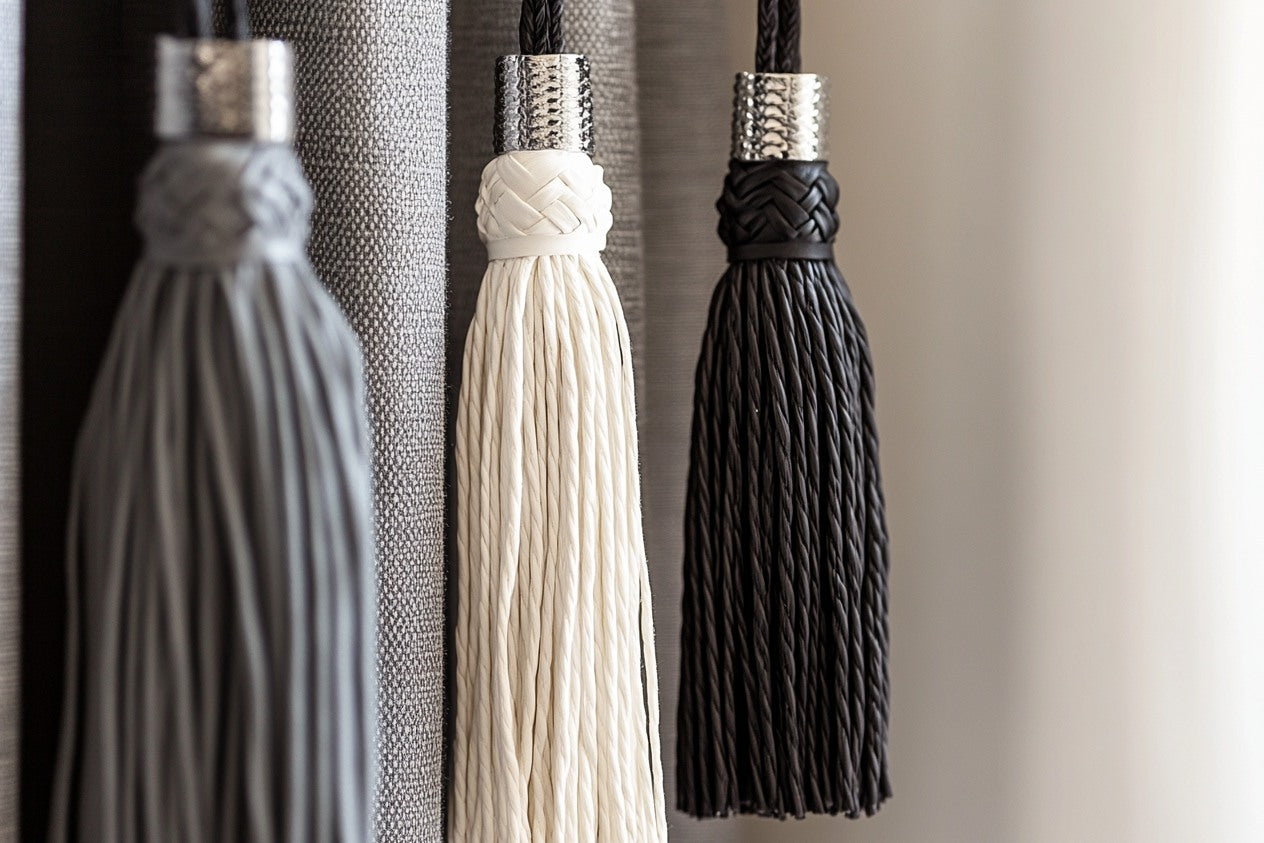
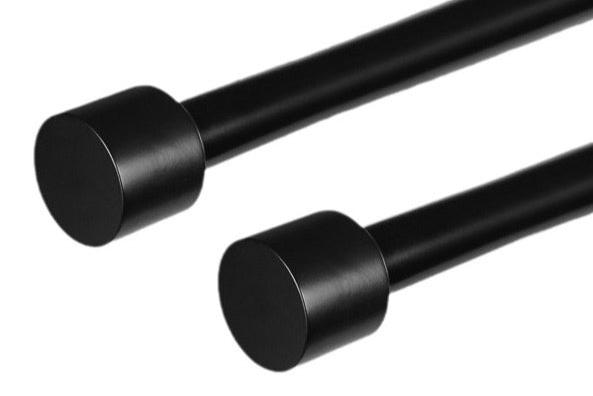
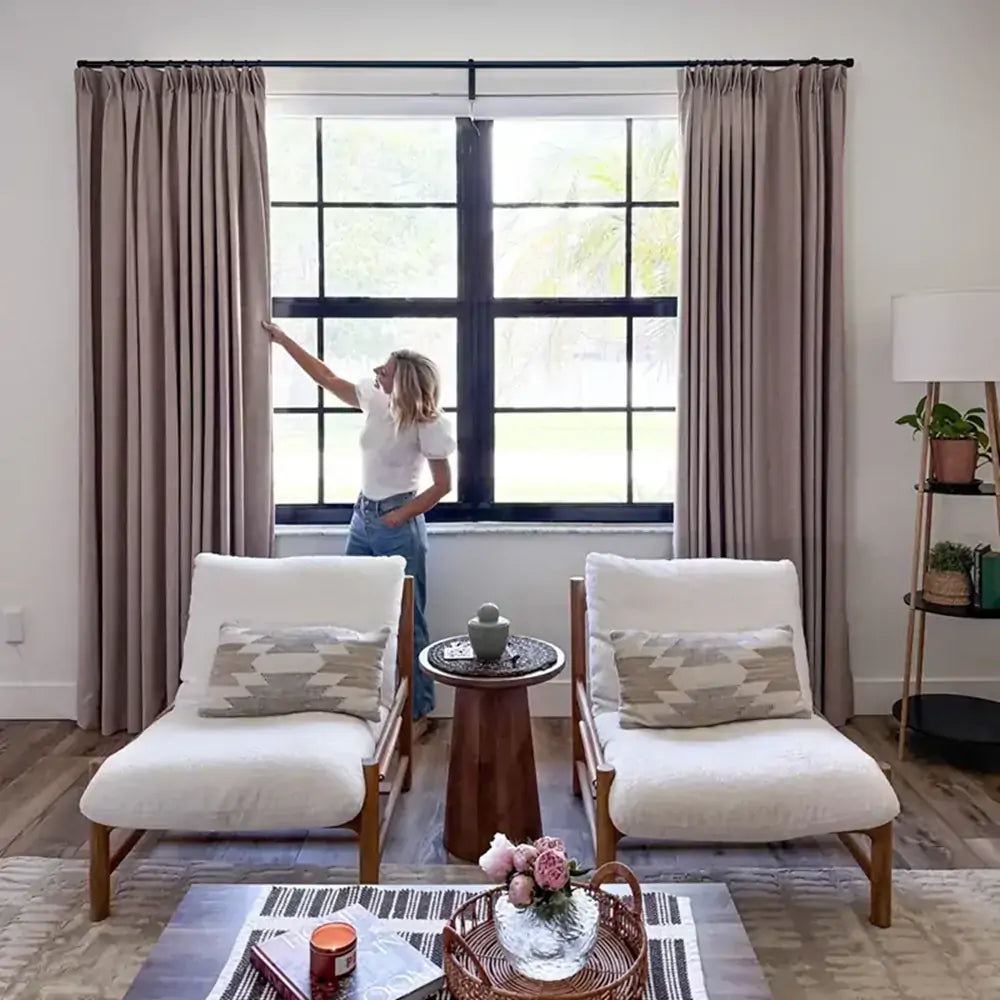


Inspired by this look? Explore custom curtains for your window
French doors need more than a glass-width measurement. Their handles project into the room, each door needs space to swing, and curtains gathered in the wrong place can make a simple trip outside awkward.
Start by deciding where the treatment will be mounted. A treatment attached to each door moves with it. Curtains mounted above the doorway stay in place and need room to stack clear of the opening. These layouts work differently and should not be measured in the same way.
First, Check How the Doors Open

Inspired by this look? Explore custom curtains for your window
Open both doors as far as you normally would. Note whether they swing into the room or outside, which door you use most often, and where each door rests when open.
For inward-opening doors, a wall-mounted rod, its brackets, or the gathered curtain panels may fall within the door's swing path. With outward-opening doors, you still need to reach the handles and locks comfortably when the curtains are closed.
Take photographs with the doors both closed and open. The open-door view often reveals clearance problems that a straight-on photograph cannot show.
Door-Mounted Treatments vs. Wall-Mounted Curtains
Treatments Mounted on Each Door
A treatment attached to an individual door moves when that door opens. This gives you separate privacy control over each glass panel without requiring wall space beside the doorway for full-length curtains.
The mounting area on a door is limited, though. The treatment must clear the handle and lock, and hardware near the top cannot prevent the door from opening fully. Some door-specific treatments use hold-down hardware to reduce movement when the door swings. Whether that is appropriate depends on the product and its installation instructions. Hunter Douglas's French-door guide identifies handle clearance and movement with the door as important considerations.
A treatment designed for door mounting is not the same as a standard floor-length curtain. Do not assume an ordinary drapery panel and rod can be fixed to the door itself.
Curtains Mounted Above the Door Opening
For a more traditional drapery look, mount a rod or track on the wall or ceiling above the pair of doors. The curtains cover the full opening when closed and stack at the sides when open.
This approach can coordinate well with full-length curtains on nearby windows. But the panels need to move out of the doorway and stay clear of the doors' swing. The rod's extension should be planned around available wall space and curtain stackback, rather than a universal measurement. The Shade Store's French-door guide likewise notes that the rod needs enough extension to move open drapery off the doors.
Measure Around the Handles

Inspired by this look? Explore custom curtains for your window
French doors may have knobs, levers, long pulls, locks, or flush bolts. Measure each door separately rather than assuming the hardware is symmetrical.
For a door-mounted treatment, record the glass size, the flat area around it, the space above the glass, and the handle's most projecting point. Then operate the handle and lock. Your hand still needs room to grip and turn them after the treatment is installed.
For wall-mounted curtains, handle projection matters too. A thick, lined panel can catch on a lever when drawn across the doorway. Do not plan an improvised cutout in a custom curtain to solve this; handle cutouts belong to specific treatment designs and should be confirmed with their manufacturer.
How to Measure Wall-Mounted Curtains for French Doors
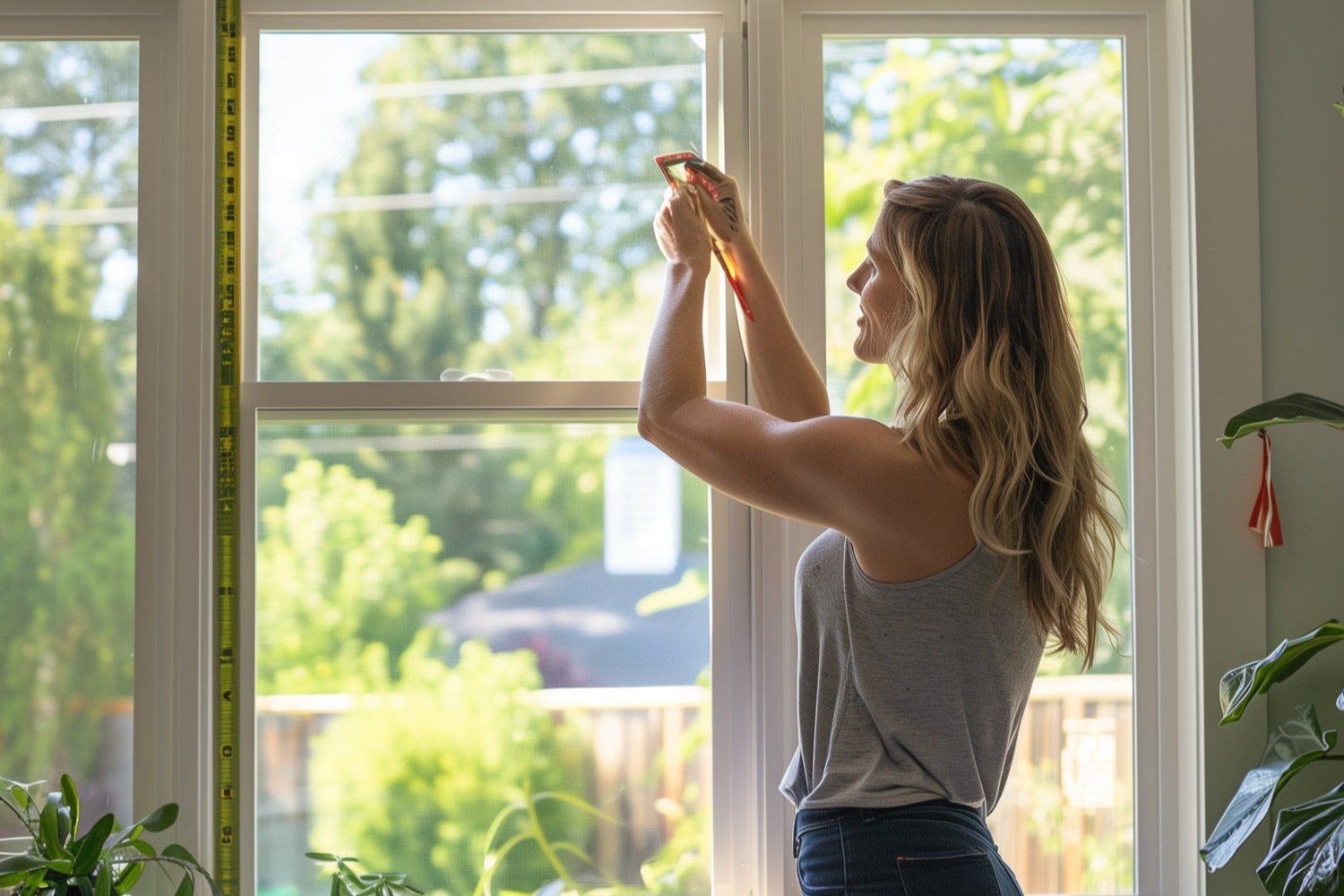
Choose the proposed rod or track position before calculating panel sizes. Record:
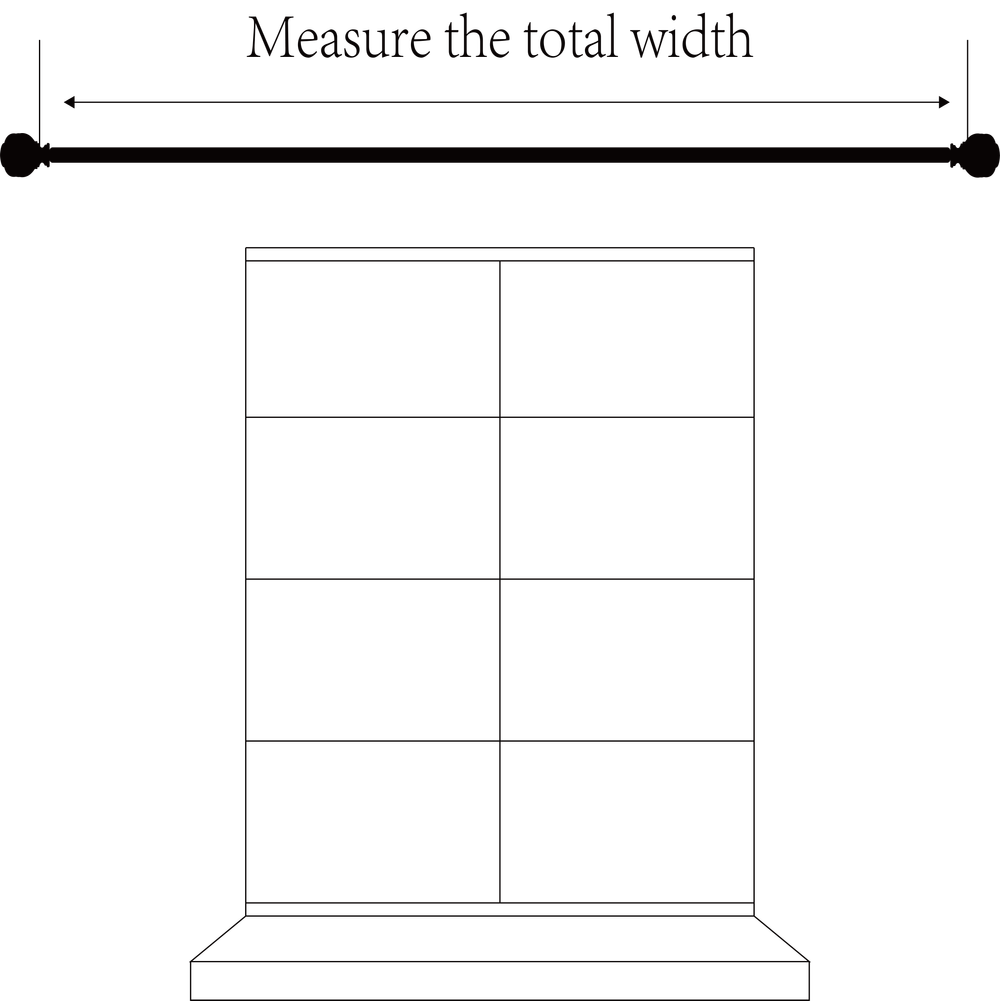
- The total width across both doors and their outer casing.
- The space between the top of the casing and the ceiling or crown molding.
- Usable wall space to the left and right of the doorway.
- The swing path of each door.
- Handles, locks, switches, sconces, and nearby furniture.
- The usable coverage width of the rod or track.
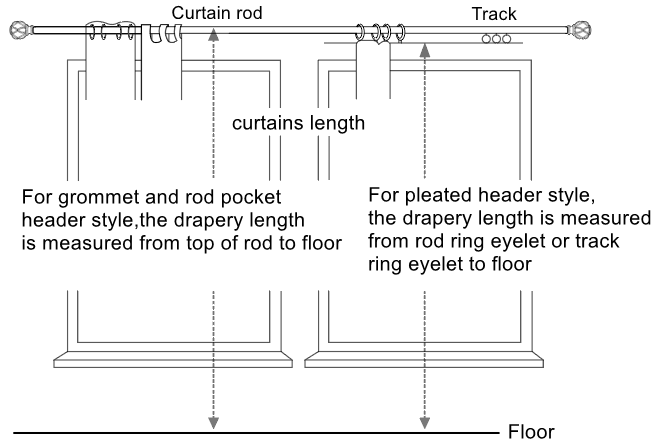
- The drop from the actual hanging point to the intended hem.
Coverage width is not glass width. Closed curtains need to cover the planned doorway area. Open curtains need somewhere to sit without obstructing the door you use most. Decorative finials and sections blocked by fixed brackets are not necessarily part of the distance a panel can travel.
For length, measure from the selected hanging point, whether that is a hook, ring, or track carrier. At a doorway used every day, consider whether a hem that rests on the floor will be stepped on, caught during cleaning, or disturbed by airflow when the doors open.
Once the hardware and heading are settled, check the order dimensions against IXACurtians' Measurement Guide and Measurement Finder.
Where Should the Curtains Stack?

Inspired by this look? Explore custom curtains for your window
If the doors are a regular route to a patio or another room, the open panels should rest outside the doorway, not loosely across the door you use most.
Even a tidy stack of dense, straight pleats occupies space. Wider panels and thicker fabrics or linings generally need more room when gathered. Mark the proposed stack area on the wall before ordering, then open both doors to see whether that area stays clear.
If only one side has enough wall space, a one-way draw may be possible. First check whether that side intersects a door's swing or a walkway. If both panels need to travel to the same side, the track must support that movement; a fixed center bracket on a standard rod may stop curtain rings from passing.
When neither side offers a practical place to park the fabric, a door-mounted treatment may serve the room better than full-length wall-mounted curtains.
Choose Fabric and Light Control for the Room
French doors in a living room may be left open to daylight for much of the day. French doors in a bedroom may need more privacy after dark. Choose the fabric and lining for the way the room is used, rather than relying on how a closed curtain looks in a photograph.
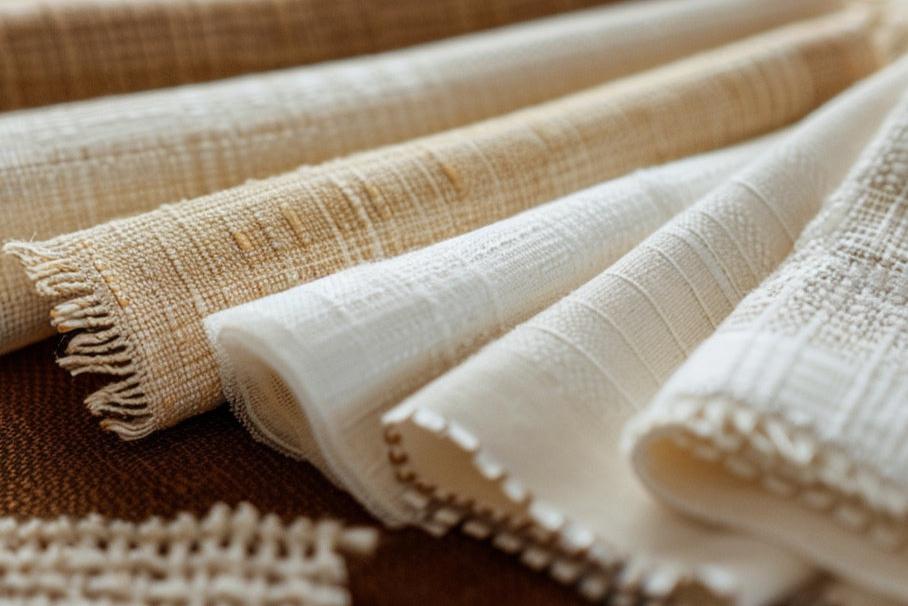
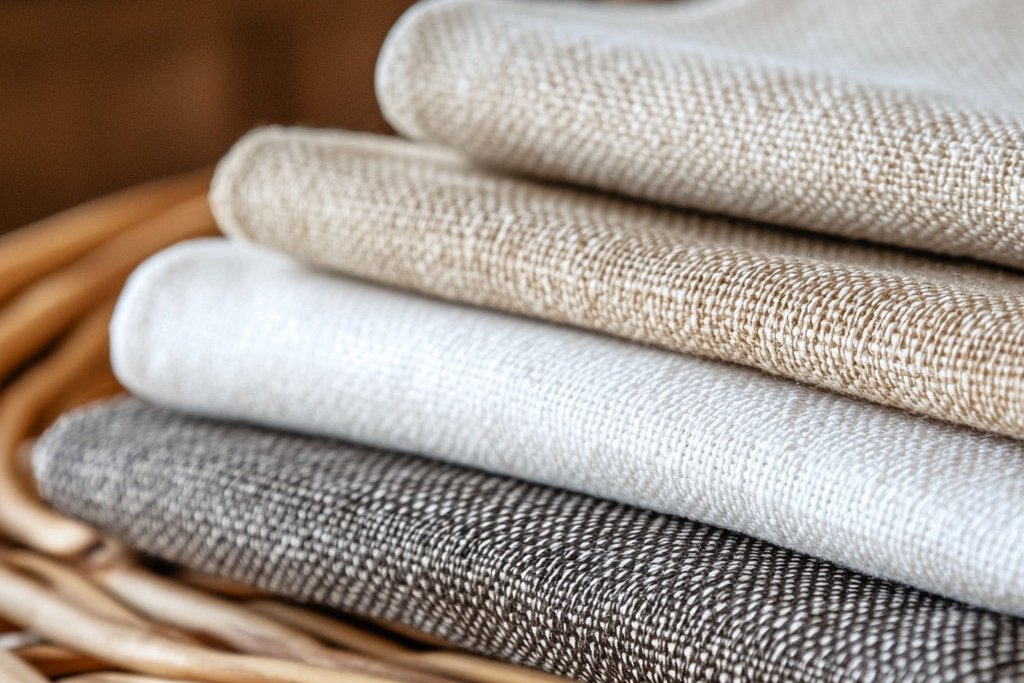
Light-colored fabric can soften the doorway, but nighttime privacy depends on its weave, lining, and the lighting inside the room. If stronger light control matters, compare the options in IXACurtians' Lining Guide. A heavier construction also affects hardware load and stackback.
For doors that lead outside and see frequent use, think about how close the hem will sit to shoes, damp floors, and regular cleaning. Order fabric swatches to judge color, texture, and weight in the room itself.
Common Mistakes to Avoid
Measuring only the glass. Wall-mounted curtains cover a planned rod or track span, not just the two glass panels.
Checking the doors only when closed. A door may clear a bracket in one position and strike it when fully open.
Stacking fabric in front of the active door. That makes daily passage awkward and encourages people to pull the curtain out of the way by hand.
Forgetting the handle. Door-mounted treatments, in particular, must leave the handle and lock easy to use.
Ordering panels before choosing hardware. Rod placement and curtain travel determine the finished width, draw direction, and length.
Plan the Door Movement Before Ordering
A successful French-door installation should let you open the door, walk through, and close it without rearranging the curtains each time. Sketch the door swings first. Then mark the area the closed curtains must cover and where the open fabric will rest.
If there is enough wall space beside the opening, explore IXACurtians' custom curtains for a wall-mounted layout. For a living room where you want a natural-looking texture that coordinates with nearby windows, Elise textured faux linen curtains are one option to consider. Confirm the finished panel width, length, heading, and stackback against your chosen hardware before ordering.
FAQs
Can you hang regular curtains over French doors?
Yes. A suitable rod or track can be mounted above the pair of doors so curtains cover the opening. That does not mean ordinary floor-length curtains are designed to attach directly to the door leaves.
Should curtains cover French-door handles?
A wall-mounted curtain may pass in front of a handle when closed, but it should not make the handle or lock difficult to use. A door-mounted treatment needs to be planned around the handle's projection.
How wide should curtains be for French doors?
Determine the rod or track's usable coverage width first, then calculate the finished panel width for the chosen heading. Glass width alone leaves out the door casing and any planned overlap.
Should French-door curtains touch the floor?
Not necessarily. At a frequently used doorway, a hem that drags may be stepped on or be harder to keep clean. Measure from the actual hanging point and choose a finish that suits daily traffic.
Can both curtain panels stack on one side?
Potentially. That side must accommodate the combined stackback, and the hardware must allow both panels to travel there without a bracket blocking the route.
Are French doors measured the same way as sliding glass doors?
No. French-door leaves pivot on hinges, while sliding doors move along a track. Both require attention to handles and passage, but their movement creates different clearance and stackback problems.