





Curtains for a Window Near a Corner: Rod Placement, Stackback & One-Way Draw
A window close to a corner does not leave equal room for curtains on both sides. The corner side may be too narrow for a finial or for the fabric to gather when opened. If you install a centered rod and split the curtains evenly, one panel may end up crowded against the side wall and covering part of the glass.
A more practical approach is often to keep the corner end compact and plan most of the stackback on the wider side. For curtains you open and close every day, a single panel with a one-way draw may work especially well. Before ordering, measure the usable span of the rod or track—not just the glass.
Why a Standard Centered Rod May Not Work
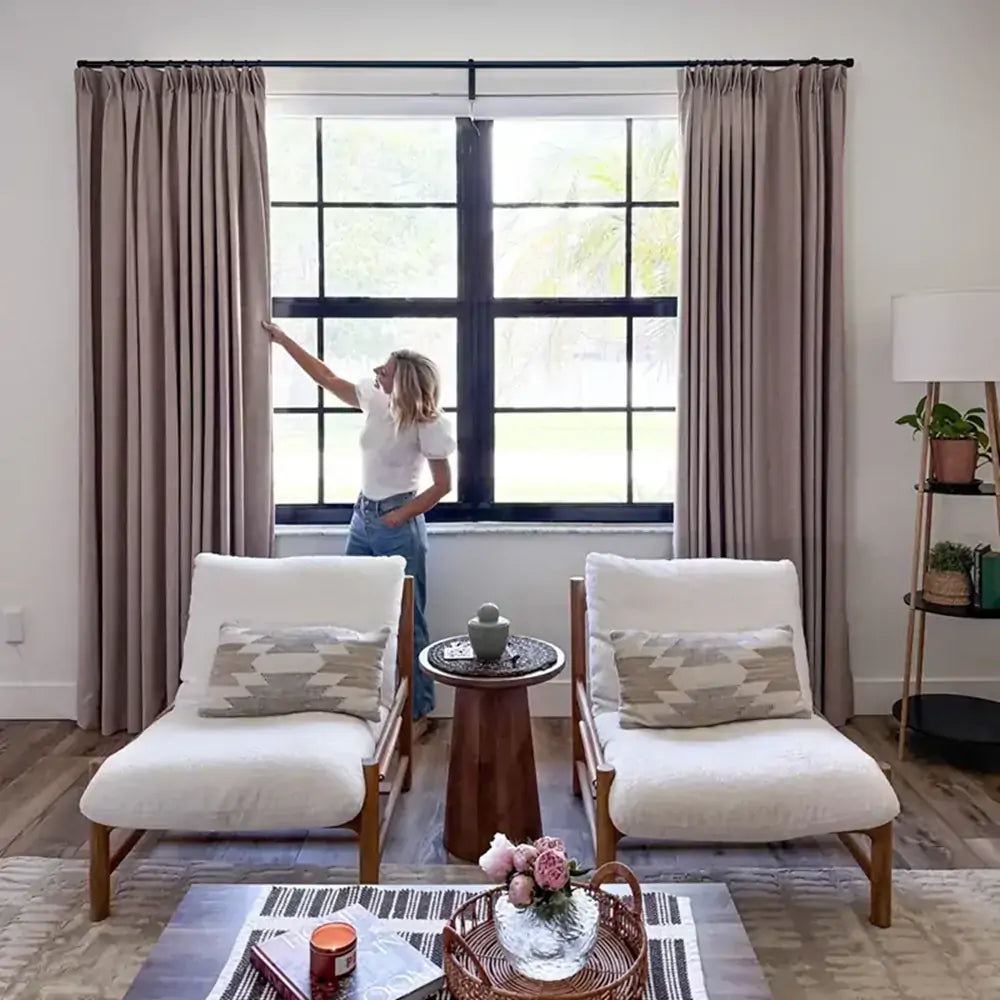
On a typical window, a rod extends a similar distance past each side of the frame, giving both panels room to gather. Near a corner, the tight side may leave little or no space for that arrangement. A finial could hit the adjacent wall, there may be no suitable place for a bracket, or the open curtain may remain in front of the glass.
Shortening the rod on the wider side simply to make both ends match can leave even more fabric over the window. When the wall space is uneven, the hardware layout can be uneven too.
Decide Where the Curtain Should Stack
Before choosing hardware, decide where the curtain should sit when fully open. That choice affects the rod or track length, the number of panels, and the draw direction.
If the corner is to the left of the window and there is more wall on the right, the curtain can usually stack on the right. If the corner is on the right, plan the main stack on the left.
With a one-way draw, all the fabric gathers on one side. That side needs room for the whole panel, not just one half of a split-draw pair. Use the finished panel width, header style, fabric, and lining to estimate the space required. Our Curtain Stackback Guide explains how to make that initial calculation.
How to Position the Rod or Track

Keep the Corner End Compact
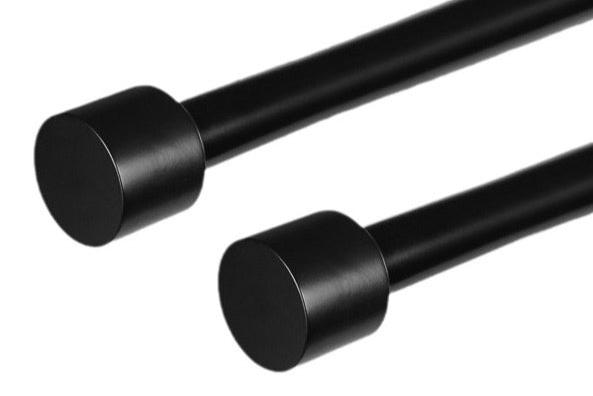
The end nearest the corner does not need a large decorative finial. Depending on the mounting surface, you might use a smaller end cap, a wall-mounted end socket, a track with a simple end profile, or a ceiling-mounted track.
The window position, wall construction, and curtain weight still matter. A bracket needs a secure mounting point; fitting the hardware into a tight space is not a reason to attach it to weak trim or an unsuitable window frame.
Extend Farther on the Open Side
The wider side can provide a place for the curtain to rest when open. Extend the rod or track according to the expected stackback and the wall space available. The extension does not have to match the corner side.
If you want to reveal most of the glass, the usable extension should hold most of the gathered fabric. Look for sconces, switches, cabinets, and doorways before treating that whole stretch of wall as available stack space.
Install High, but Check the Corner First
Mounting the hardware higher can make the window look taller and help an asymmetrical arrangement feel more intentional. First check for crown molding, vents, and other fixtures above the frame.
Before drilling, use painter’s tape to mark the hardware ends and the area the open curtain will occupy. Step back and view the wall from the doorway or a seat you use often.
Corner Window Curtain Ideas for a Window Near a Side Wall
Search results for corner window curtains ideas often show two windows on adjoining walls. If you have just one window close to a corner, the main questions are different: where will its curtain gather, and what hardware will fit at the tight end?
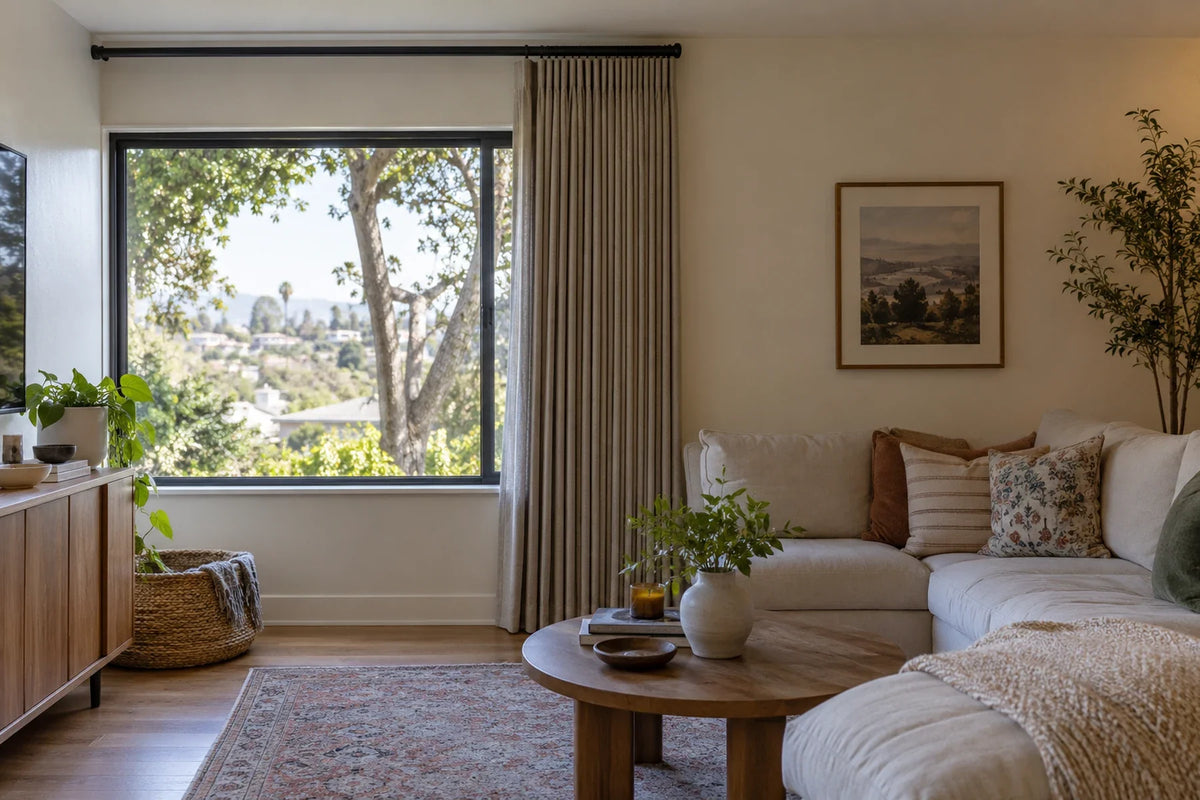
A single panel stacking on the wider wall is a straightforward choice when the curtain must open and close daily. Check that the open side can hold the full stack while leaving most of the glass visible.
A ceiling-mounted track with a one-way draw can help when there is very little room beside the frame or a conventional finial would hit the side wall. The ceiling and track must be suitable for the curtain’s weight.
A narrow stationary panel on the corner side can make the window treatment look more balanced, while the functional panel gathers on the other side. The fixed panel will, however, cover some glass at all times.
An inside-mounted window treatment paired with a decorative side panel is another option when there is not enough wall space for a full operable curtain. The inside-mounted treatment handles privacy and light control; the side panel softens the wall. Make sure it does not interfere with opening the window.
There is no single best option for every room. Start by deciding whether the curtain needs to close, then work out which side can accommodate the fabric.

When a One-Way Draw Works Best
A one-way draw means the curtain gathers entirely on one side instead of splitting between left and right. It is useful when the corner side has almost no space, the opposite side has enough wall, and the curtain will be operated regularly.
When ordering hardware or curtains, specify where the fabric should stack when open: “stack on the left” or “stack on the right.” Saying only “opens left” can be ambiguous. It may describe either the direction of travel or the final parking position.
For a wide panel used frequently, a one-way curtain track may be easier to operate than a rod-pocket curtain. Fixed pleats used with compatible hooks, carriers, or rings can also help the folds stay orderly.
One Panel or Two Panels?
One Functional Panel
A single panel is often the simplest arrangement for a window near a corner. When open, it gathers on the wider wall; when closed, it travels toward the corner.
Its finished width must cover the area planned along the usable rod or track. For fixed-pleat styles such as French pleat or tailored pleat, use the finished width after pleating when checking coverage.
Two Panels With an Uneven Stack
You can also use two panels that meet when closed and plan for both to gather on the wider side. This requires hardware that allows each panel to follow its intended route. The wider wall must accommodate their combined stackback.
A fixed bracket on an ordinary rod may stop curtain rings from passing. Before buying the hardware, trace where each panel will travel from fully closed to fully open.
A Stationary Decorative Panel
A narrower fixed panel on the corner side can provide visual balance while the other panel does the daily work. But that fixed panel will always cover part of the glass. In a room with limited daylight, consider whether the visual effect is worth the loss of light.
How to Measure a Window Near a Corner
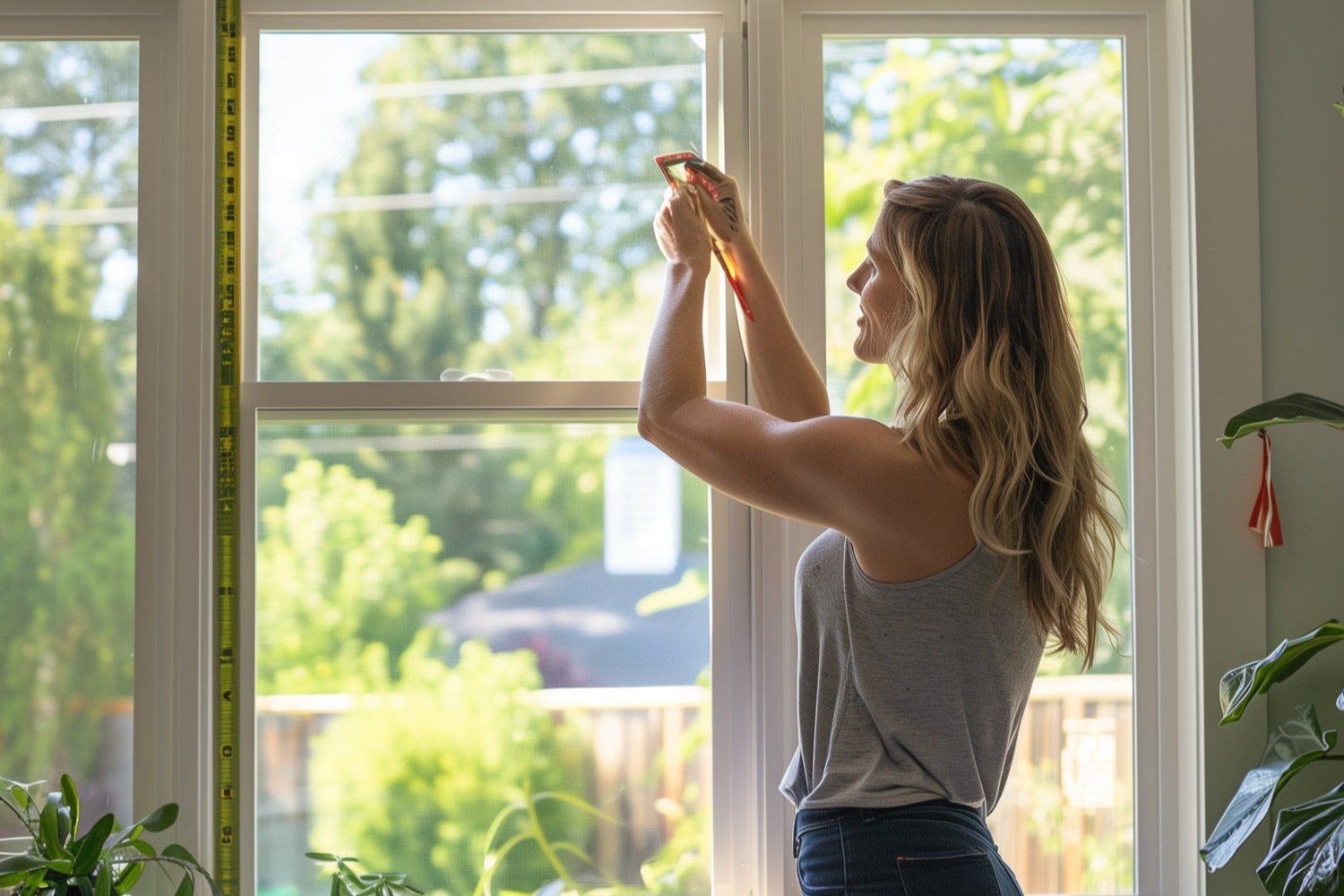
Measure the window and the space around it. Record:
- The outside width of the window frame.
- The distance from the frame to the corner.
- The usable wall width on the opposite side.
- The planned mounting height.
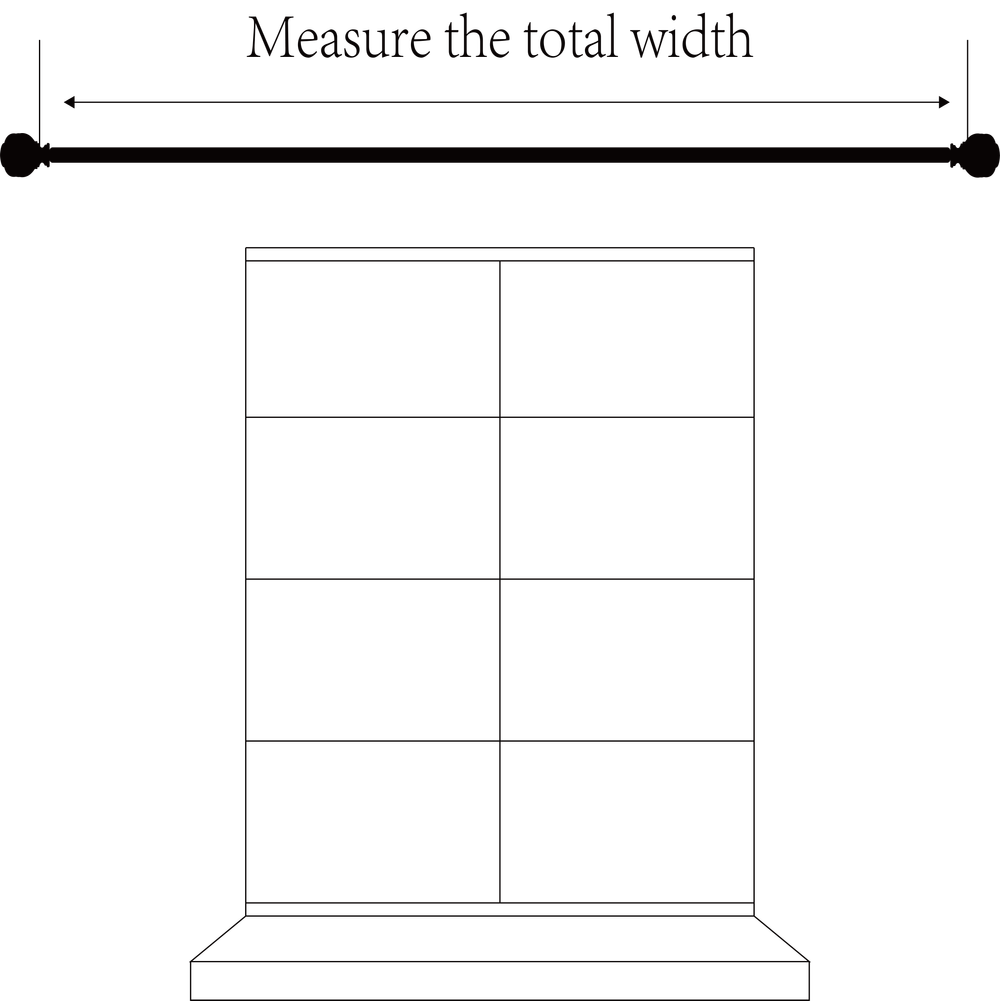
- The rod or track’s usable coverage and travel range.
- The space available for stackback on the wider side.
- Nearby doors, cabinets, switches, sconces, and vents.
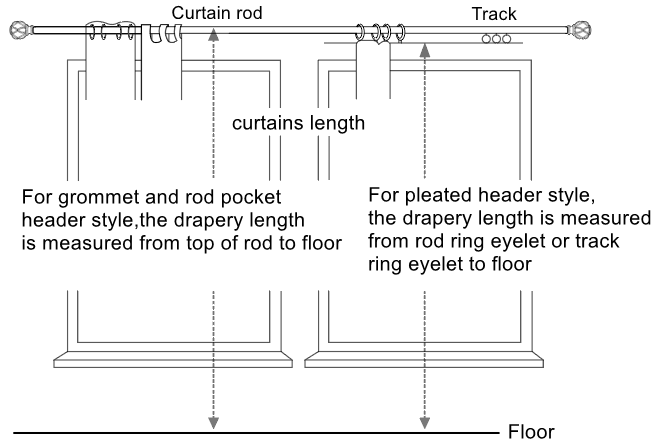
- The distance from the actual hanging point to the floor.
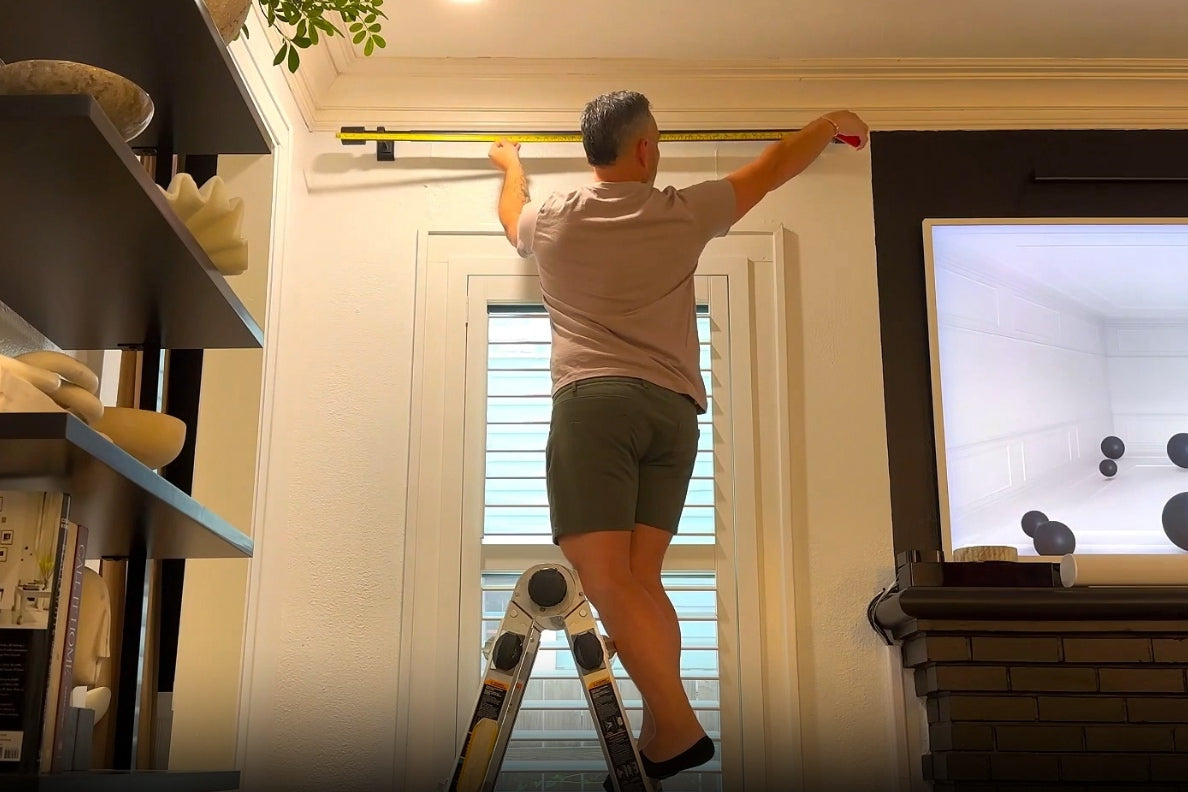
For a one-way draw, identify the closed endpoint near the corner and the open stack position on the wider side. Then measure the usable rod or track span between them. The curtain must be wide enough to cover the planned area when closed. Decorative finials do not count as usable travel length.
Once you have planned the hardware position, check your order dimensions against the IXACurtians Measurement Guide and Measurement Finder.

What Affects One-Side Stackback?
Finished width. A panel covering a wider span generally has more fabric to accommodate when open.
Header style. French pleat and tailored pleat curtains have fixed folds that often form a more orderly stack. Grommet, rod-pocket, and tab styles gather differently.
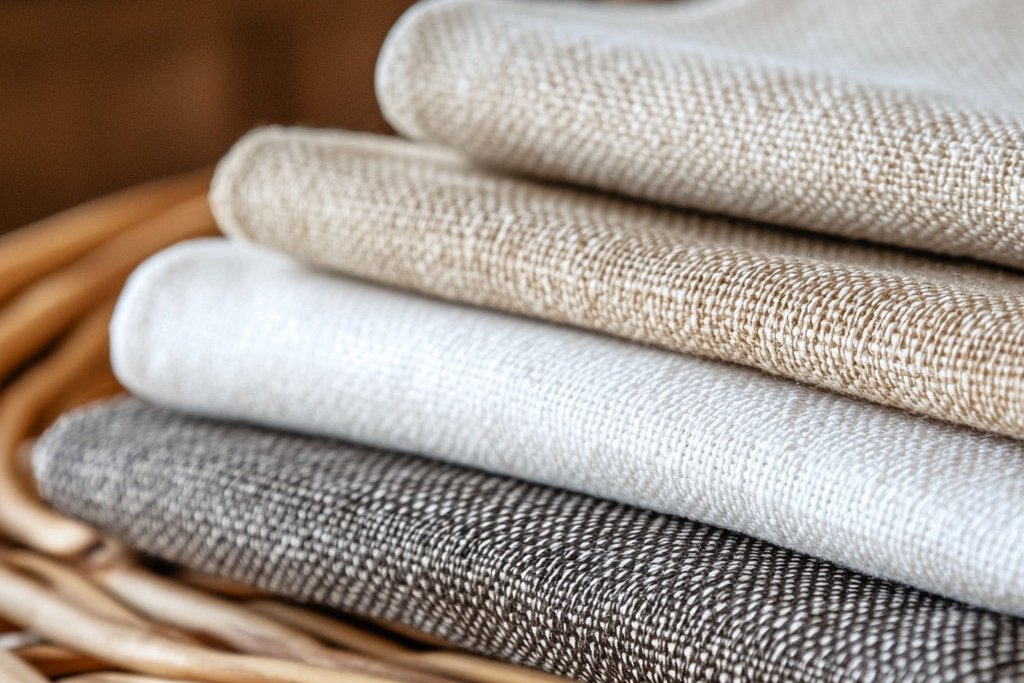
Fabric and lining. Lightweight fabric usually gathers more compactly. Heavy velvet, blackout lining, and layered treatments can require more room.
Hardware. Rings, track carriers, brackets, and returns affect where a panel can travel. The overall rod length alone does not tell you where the curtain can stop.
For more on curtain width and fullness, see our Curtain Fullness Guide.
Rod or Track: Which Is Better Near a Corner?
A conventional rod can work when there is enough room for a bracket and end treatment near the corner, and the curtain does not need to pass a fixed support. It offers a more visible decorative detail, but its finial, brackets, and rings all take up space.
A track usually has a simpler end profile and can be easier to plan for a one-way draw. If wall-mounting space is limited, a ceiling-mounted track may be an option, provided the mounting surface and hardware can support the curtain.
For a wide, heavily lined, or frequently operated panel, check both the load capacity and the way the curtain moves. You can compare options in the IXACurtians Curtain Hardware collection.
Common Mistakes to Avoid
Forcing a symmetrical rod layout. Unequal wall space does not require equal rod extensions.
Parking the fabric in the corner. The open curtain may cover glass or rub against the adjacent wall.
Measuring only the glass. The curtain must suit the coverage area established by the installed rod or track.
Underestimating one-side stackback. A one-way draw puts all the fabric on one side, not half of it.
Ordering curtains before choosing hardware. The hardware position and travel path affect finished width, draw direction, and length.
Plan the Stack Side Before Ordering
A window near a corner can still have curtains that open neatly and reveal most of the glass. Decide where the fabric will stack first. Then plan the hardware position and panel width around that decision.
IXACurtians’ custom curtains can be made according to your usable rod or track width, draw direction, header, fabric, and lining. If the standard ordering options do not suit your corner, send us a photo of the window and your measurements so we can discuss the layout before you order.
FAQs
What is the best curtain layout for a window close to a corner?
If there is little room on the corner side, keep that end of the hardware compact and let the functional curtain stack on the wider wall. The final layout must also suit the mounting surface, hardware capacity, and panel width.
Should the curtain rod still be centered over the window?
Not necessarily. The corner side may allow almost no extension, while the wider side needs extra length to hold the curtain when open.
What is a one-way draw curtain?
A one-way draw curtain gathers at one end of its rod or track when open. It works well when one side of a window has much less wall space than the other.
Which side should a one-way curtain stack on?
Usually the side away from the corner, provided it has enough usable wall space. Check that the stack will not interfere with a door, cabinet, switch, sconce, or walkway.
Can I use two curtain panels near a corner?
Yes. Plan the travel path of both panels and their combined stackback. If both need to move to the same side, make sure the hardware and brackets will not block them.
Is a track better than a rod for a window near a corner?
A track is often easier to arrange when corner space is very tight or a one-way draw is needed. A rod can still work if its finial, brackets, load capacity, and usable travel range suit the window.