



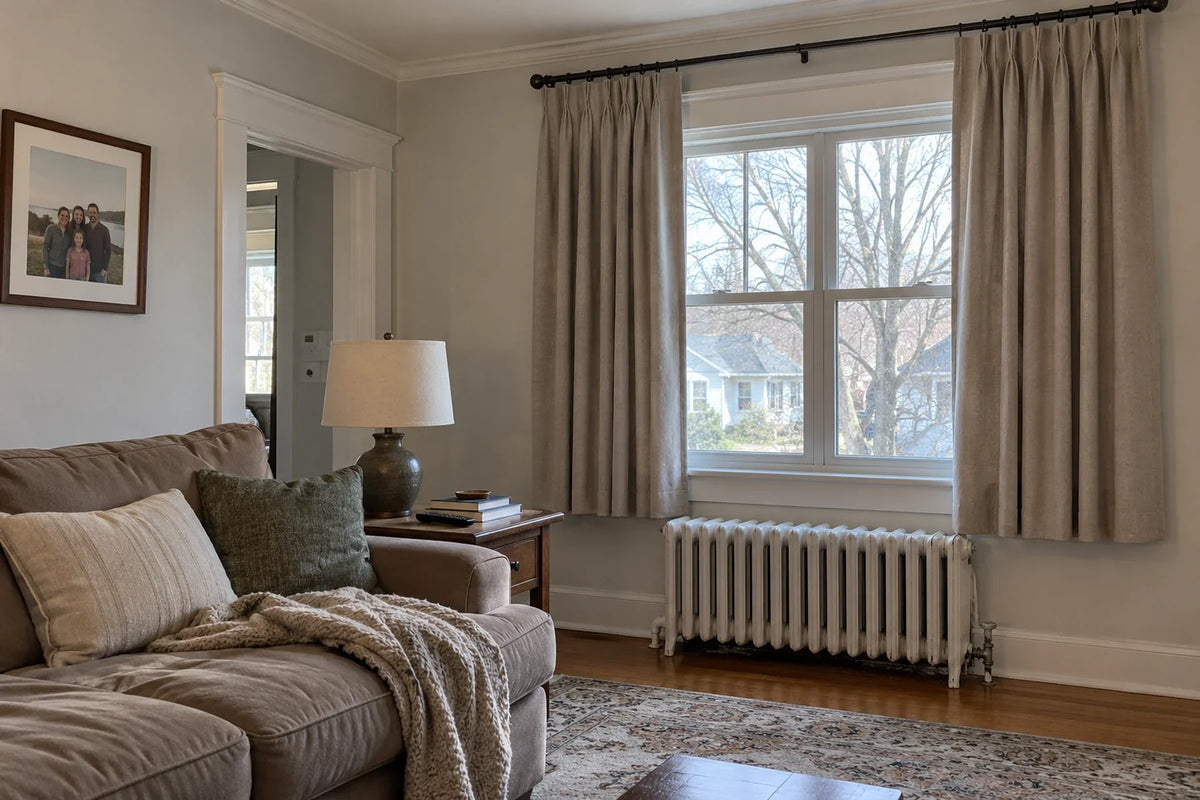
Radiators beneath windows are common in older American homes, apartments, and houses in colder climates. Curtains above a radiator should never cover, touch, or restrict the heat source. Sill-length curtains or custom short curtains are often the easiest options for maintaining airflow. If you prefer floor-length panels, they should stack completely to the sides of the radiator and remain securely away from it during everyday use.
There is no universal clearance that applies to every heating system. Some fixed electric baseboard heaters require drapes to remain at least 6 to 12 inches away, while portable space heaters should generally be kept at least 3 feet from curtains and other combustible materials. Always follow the label and installation instructions for your specific heater.
First, Identify the Type of Heater
Before measuring your curtains, identify the type of heating equipment beneath the window.
Steam or Hot-Water Radiator
Traditional cast-iron radiators generally use steam or hot water. They warm a room through both radiant heat and natural air circulation. Although they operate differently from electric heaters, covering them with curtains can still restrict the movement of warm air into the room.
Electric Baseboard Heater
Electric baseboard heaters are usually installed low along the wall. Cooler air enters near the bottom, passes over the heating element, and rises from the top. Curtains hanging above or in front of the unit can interrupt this airflow and may cause heat to build up in a confined area.
Clearance requirements vary by model. Some fixed electric baseboard heaters require curtains to remain at least 6 inches away, while others call for 12 inches between the heater and objects hanging above it. Check the heater’s manual instead of relying on a general number found online.
Hot-Water Baseboard Heater
A hydronic baseboard heater contains a hot-water pipe surrounded by metal fins. It does not operate like an exposed electric heating element, but it still depends on air entering from below and leaving through the top. Covering the unit with curtains can reduce airflow and make room heating less effective.
Portable Space Heater
A portable space heater should not be treated like a permanently installed radiator. The U.S. Consumer Product Safety Commission recommends keeping portable heaters at least 3 feet away from curtains, furniture, bedding, and other materials that can burn. Never position one beneath curtains or where moving fabric could reach it.
What Curtain Length Works Best Over a Radiator?
Sill-Length Curtains
Sill-length curtains are often the most practical choice for a window above a radiator. The hem ends near the windowsill instead of extending down over the heating equipment, preserving privacy without unnecessarily blocking the heat source.
Depending on the window, the curtain can finish just above the sill or slightly below it. The final length must still leave the clearance required by the heater manufacturer.
Apron-Length Curtains
Apron-length curtains usually extend several inches below the windowsill. They can create a more finished appearance than very short curtains when there is generous space between the sill and the radiator.
Do not order a standard apron length without measuring the available space. Measure from the intended hanging point to the top of the radiator, then subtract the clearance required for that heater. If there is not enough room, choose a sill-length curtain instead.

Floor-Length Curtains
Floor-length curtains can make a room feel taller and give the window a more complete custom look, but they are not suitable for every radiator window.
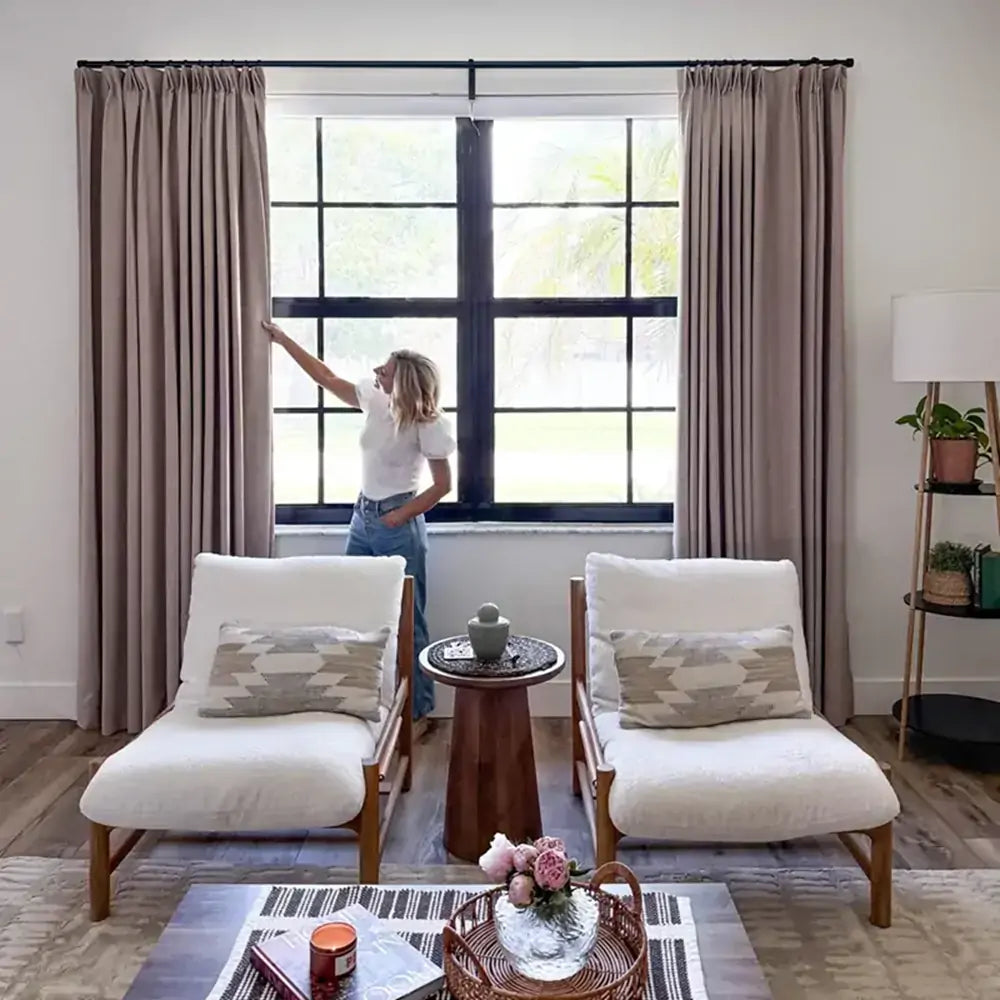
They may work as stationary decorative panels when they can remain fully stacked on the walls beside the radiator. The rod or track must extend far enough beyond the window to keep the fabric away from both the top and front of the heat source. You will also need to account for the curtains’ stackback when planning the hardware width.
If closing the curtains would place them over an operating radiator, floor-length panels are not the right choice. Tiebacks do not replace proper clearance because a panel can come loose, shift, or be moved by someone else.
How Much Clearance Do Curtains Need Above a Radiator?
There is no single measurement that applies to every radiator, baseboard heater, and home. Safe clearance depends on the heater type, model, direction of airflow, and manufacturer’s instructions.
For example, instructions for some fixed electric baseboard heaters specify at least 6 inches between the unit and drapes, while other models require a minimum of 12 inches beneath objects hanging above the heater. Portable space heaters require substantially more separation.
Use this order when determining the appropriate clearance:
- Find the heater’s manufacturer and model number.
- Check its label or installation manual for clearance requirements.
- Measure from the top of the heater to the sill or intended curtain hem.
- Choose the final curtain length only after allowing for the required clearance.
If the manual is unavailable or the heating system is particularly old, ask a qualified HVAC or electrical professional to inspect it instead of estimating the distance.
Can Curtains Touch Steam Radiators?
Curtains should not touch an operating steam radiator. Although steam and hot-water radiators differ from electric baseboard heaters, prolonged contact with a hot surface can discolor or damage fabric. It can also restrict the movement of warm air into the room.
Do not tuck curtains behind the radiator, lay them across the top, or allow the hem to rest on its surface. If the fabric can move toward the radiator when a window is open, a fan is running, or someone walks past it, shorten the curtains, reposition the rod, or keep the panels securely stacked beside the heater.
Do Long Curtains Block Radiator Heat?
They can. Radiators and baseboard heaters rely on air moving freely around them. When curtains cover the unit, warm air may become trapped between the fabric and the glass instead of circulating into the room.
The area around the window may become warmer while the rest of the room heats more slowly. The U.S. Department of Energy recommends keeping radiators and baseboard heaters unobstructed so heat can circulate effectively.
Closing long curtains in front of a radiator may also direct more heat toward the window. A thick curtain does not provide an efficiency benefit if it prevents the heating system from distributing warmth throughout the room.
How to Measure Curtains for a Window Above a Radiator
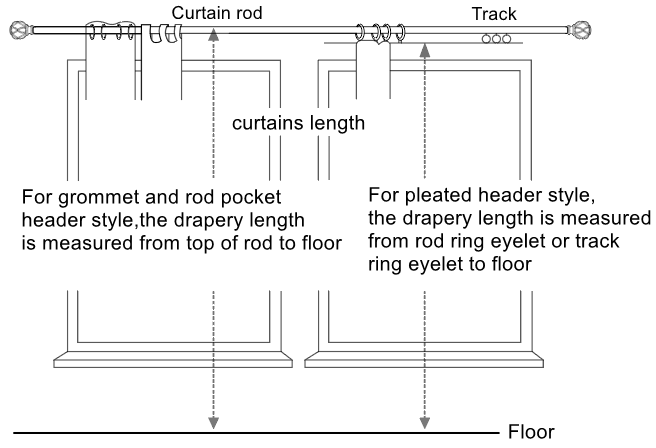
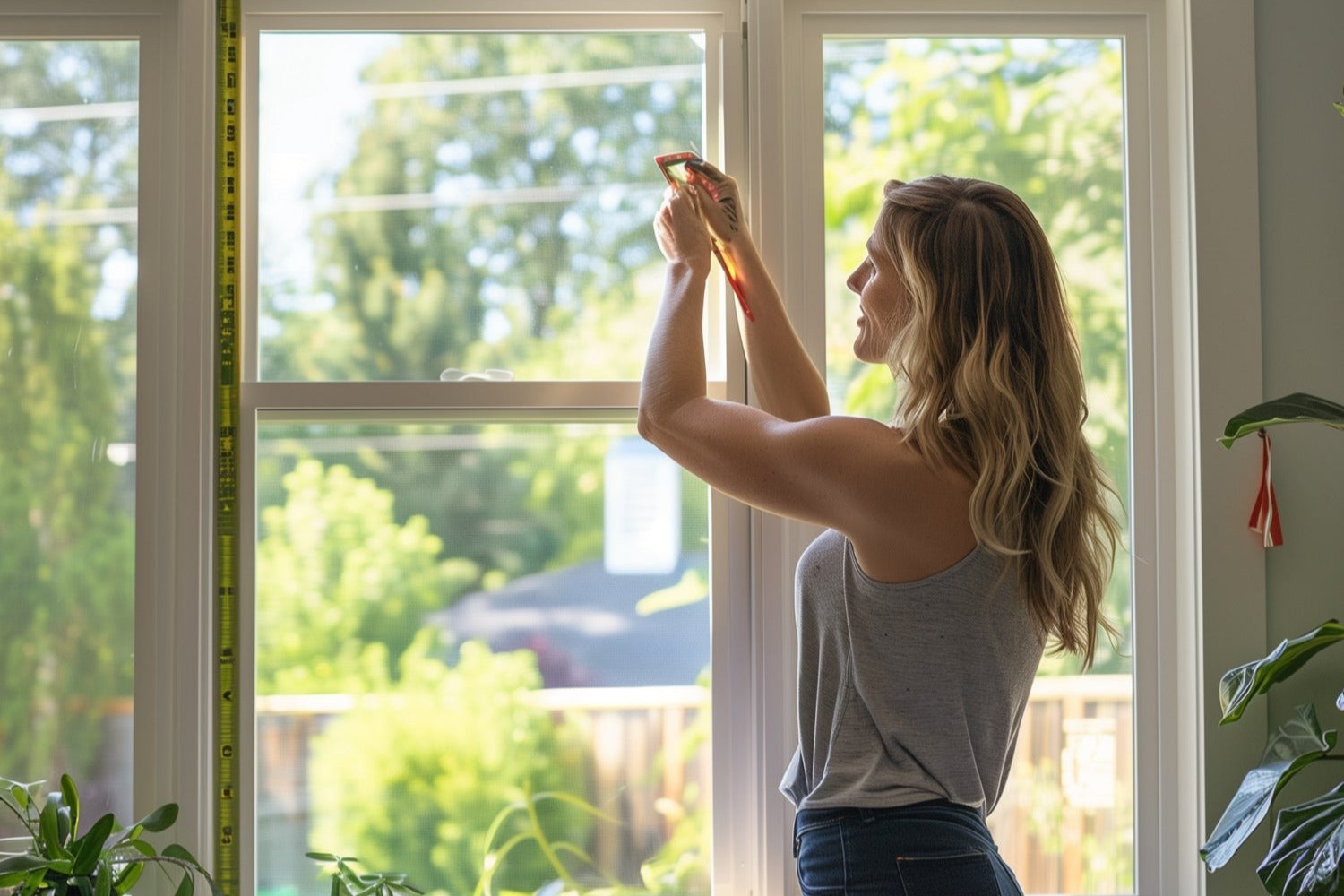
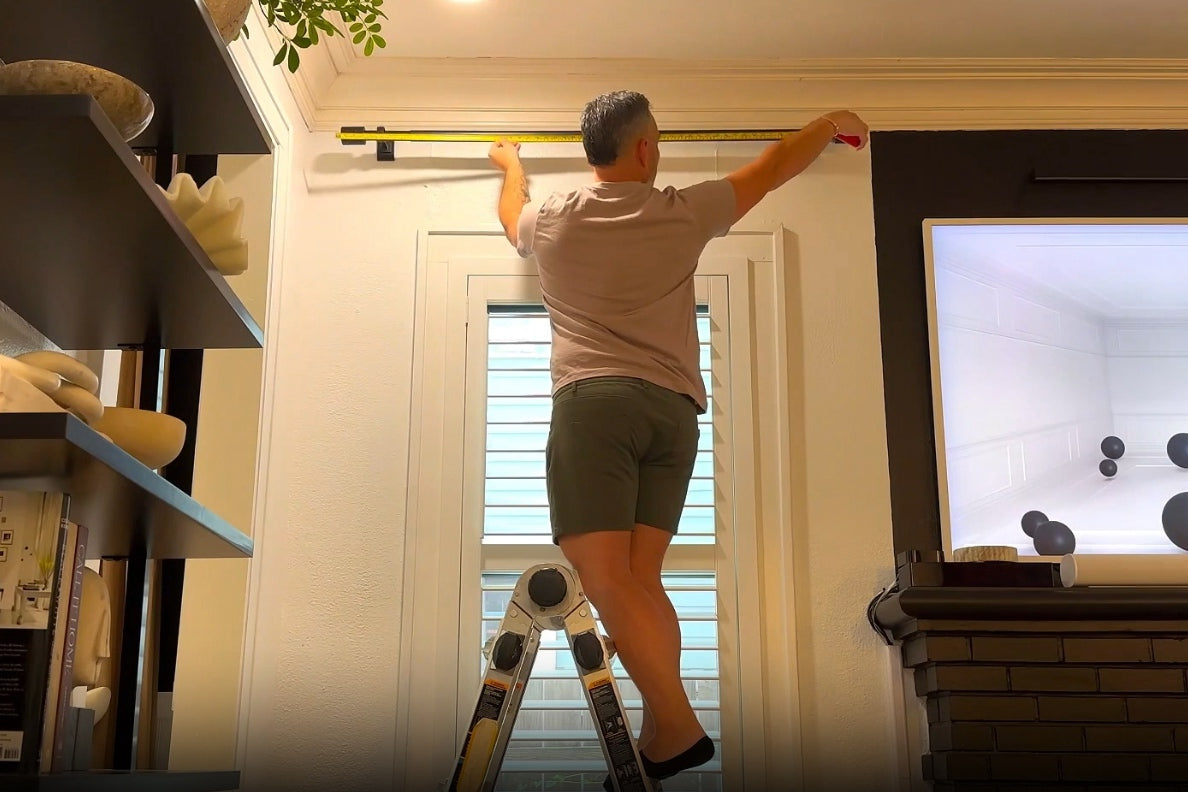
Do not measure only from the curtain rod to the floor. For a radiator window, record:
- The rod or track to the top of the windowsill
- The rod or track to the bottom of the windowsill
- The rod or track to the top of the radiator
- The space between the radiator and the bottom of the sill
- How far the radiator projects into the room
- The clearance required by the heater manufacturer
- The available wall space on each side of the radiator
Measure at the left, center, and right sides of the window. In older homes, the sill, radiator, or floor may not be perfectly level.
Once you have these measurements, consult the IXACurtians Measurement Guide and use the Measurement Finder to check the appropriate ordering dimensions.

How to Hang Curtains With a Radiator Under the Window
Confirm the heater’s clearance requirements before deciding where to install the rod and where the curtain should end. When wall space allows, extend the rod beyond both sides of the window so the open curtains can rest beside the radiator instead of directly in front of it.
For short curtains, measure from the actual suspension point on the rod or track to the planned hem. The finished length should suit the windowsill while still maintaining the required distance from the heater.
Floor-length decorative panels need enough wall space for a full stackback on both sides. When open, the panels should clear the top and front of the radiator and should not cover a thermostat, valve, air intake, or outlet.
Wide or lined curtains also need hardware that can support their finished weight. A rod that is too narrow may leave the open panels sitting directly in front of the radiator, even when the curtains are pulled back as far as possible.
How to Keep the Room Looking Finished
Short curtains do not have to look unfinished. A well-chosen header, appropriate fullness, and an accurately placed hem can still give the window a tailored appearance.
Mounting the rod higher above the window can strengthen the room’s vertical lines while allowing the curtains to end neatly near the sill. The important point is that the fabric remains clear of the radiator.
If the room contains several windows, the ordinary windows can keep their floor-length panels while the radiator window uses a shorter curtain in the same fabric. Coordinating the color, header, and hardware often looks more intentional than forcing every panel to have the same length.
Curtain Ideas for a Window Over a Radiator
Several curtain arrangements can work above a radiator, depending on the available space.
Sill-length curtains suit windows where the radiator sits close to the sill. They cover the glass without bringing excess fabric down toward the heat source.
Short lined curtains provide more privacy or light control in a bedroom. Because lining adds thickness, the final length and clearance still need to be measured for the actual heater.
Sheer curtains create a lighter appearance and compress easily when opened. However, lightweight fabric can move with air currents. Sheers should not be placed closer to a radiator simply because the fabric is thin, and they must not touch hot surfaces or block an air outlet.
Stationary floor-length panels can remain on the walls beside the radiator while an inside-mounted window treatment provides privacy. This arrangement works best when there is generous wall space on both sides and the long panels can remain securely away from the heat source.
Whichever arrangement you choose, the curtains should not cover an intake, outlet, or heated surface. Fabric type never replaces the clearance specified by the heater manufacturer.

What Fabric Works Best Near a Radiator?
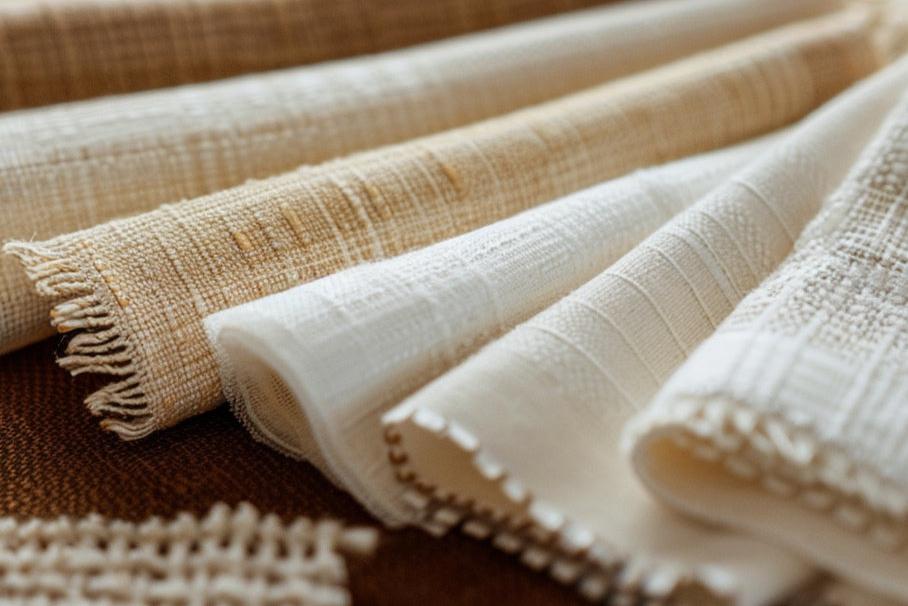
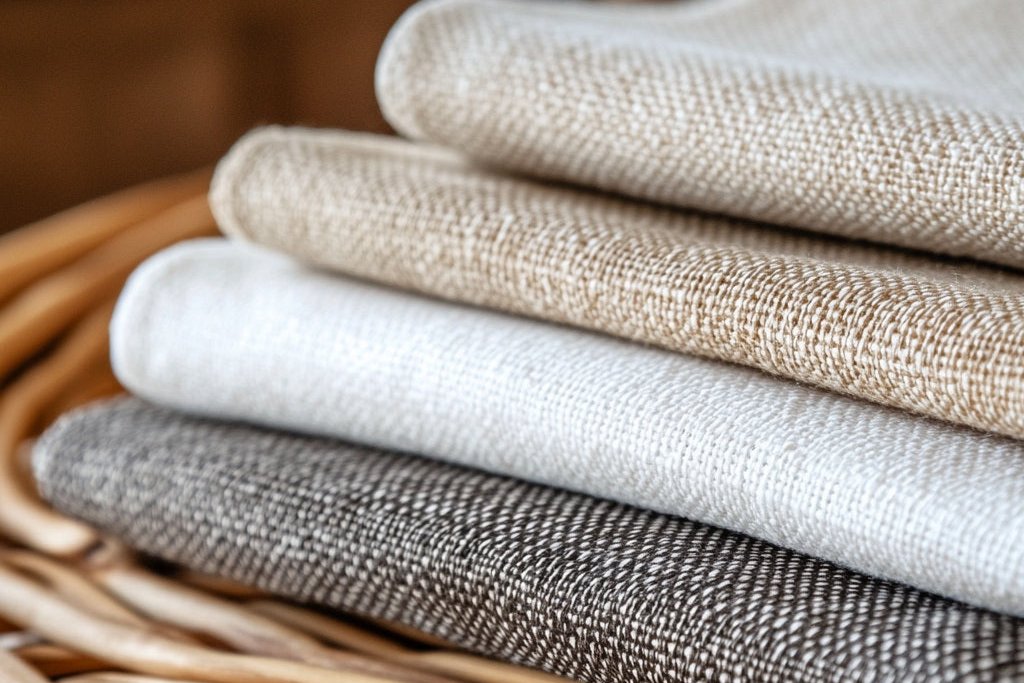
Fabric choice does not change the heater’s required safety clearance. Linen-look curtains, velvet drapes, and blackout-lined panels must all remain away from the heat source.
In a tight space, a medium-weight fabric with a stable drape is often easier to keep in position. Very heavy fabrics and multiple lining layers occupy more space and may restrict airflow around the radiator.
If the room needs greater light control, consider a precisely measured short lined curtain instead of allowing oversized blackout curtains to gather near the heater. Review the IXACurtians Lining Guide, or order fabric swatches to compare fabric weight and texture in the room.
Use Curtains Without Restricting Heat Flow
During winter, open curtains on sunny windows during the day so sunlight can contribute warmth. Close them after sunset to reduce the chill from cold glass, as recommended in the Department of Energy’s Home Energy Checklist.
When a radiator sits below the window, however, curtains should only be closed if they can remain clear of the heating equipment. Keep all air intakes, outlets, and heated surfaces unobstructed.
Do not tuck the curtains behind the radiator or place fabric on top of it. If the panels can move toward the heat source because of an open window, fan, or foot traffic, shorten them, reposition the hardware, or choose a different window treatment arrangement.
Choose a Length Made for the Actual Window
A radiator window should not automatically receive the same floor-length curtains as every other window in the room. Identify the heating system and its required clearance first, then choose a curtain length based on the sill, radiator height, and available wall space.
IXACurtians custom curtains can be made according to the window’s actual measurements, header style, fabric, and lining requirements. If the standard options shown online do not suit the space above your radiator, contact us to discuss a custom finished length.
FAQs
Can curtains hang over a radiator?
Curtains should not cover or touch an operating radiator. They may restrict heat from entering the room, and curtains near electric heaters must follow the manufacturer’s stated safety clearance.
How far should curtains be above a radiator?
There is no universal distance. Some fixed electric baseboard heaters require at least 6 inches of clearance, while others require 12 inches. Check the label or installation manual for the specific heater.
Are floor-length curtains safe over a radiator?
They may be suitable only when they remain securely away from the radiator and meet the heater’s clearance requirements. If closing the curtains would cover the radiator, floor-length panels are not appropriate for that window.
Do curtains stop heat from a radiator?
Curtains do not stop a radiator from operating, but panels covering it can restrict airflow and trap warmth near the window instead of allowing it to circulate through the room.
Can curtains touch a steam radiator?
They should not. Continued contact with a heated surface can discolor or damage the fabric and may interfere with the circulation of warm air.