








A window behind the bed can make a bedroom feel brighter and more open. It can also make curtains harder to use than they first appear. A panel may hang neatly during the day, then catch behind the headboard when you try to close it at night. Or the curtains may close easily but leave a strip of morning light beside your pillow.
Before choosing a fabric, put the bed in its intended position. Check whether curtains can pass behind the headboard without being trapped, and where the panels will stack when open. If there is no clear path for working curtains, an inside-mount shade with stationary side panels may be more practical. The right length depends on that layout, not just the height of the window.
Start With the Headboard, Not the Window
For most windows, you can begin with the frame and the curtain rod. Behind a bed, the headboard changes the plan.
Look at how high it reaches, how far it projects from the wall, and whether it covers the lower part of the window. Then picture closing the curtains from both sides. Will the fabric pass behind the headboard, or will it bunch up against it? Can you reach the panels comfortably from beside the bed?
There is no single headboard clearance that works for every room. A slim, unlined panel needs a different amount of space from a lined velvet curtain with deep pleats. The useful test is whether the finished curtain can travel its full route and hang straight once closed.

Can Curtains Hang Behind a Headboard?
Yes, provided the headboard does not pin the fabric against the wall. A trapped curtain tends to pull out of line when the bed shifts, and even a well-made panel becomes frustrating if you have to tug it free every evening.
If you want the curtains to close across the entire window, place the bed in its final position before measuring. Check the headboard, bed frame and bedding, not just the gap at the top. The curtain should be able to pass behind the bed without catching as it opens and closes.
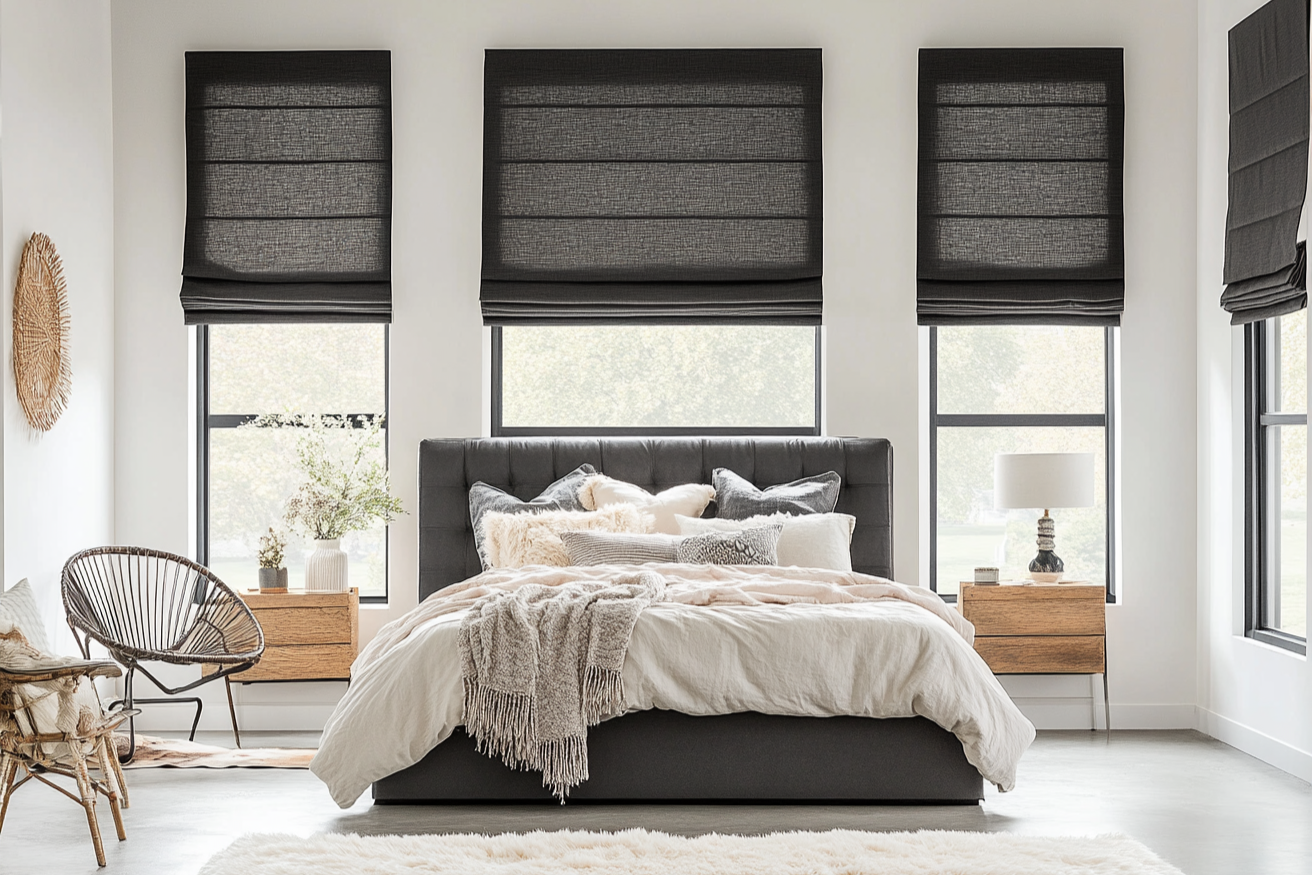
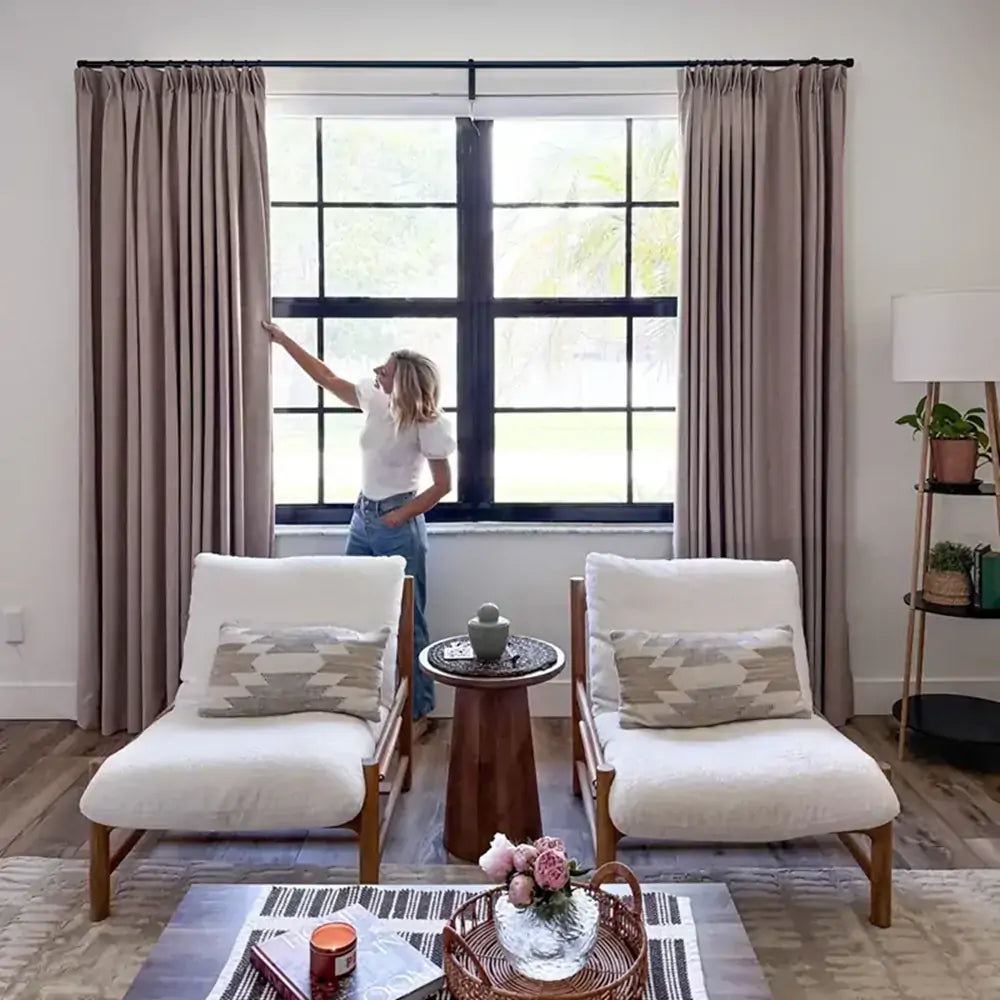
When the bed needs to stay close to the wall, consider a different division of labor: use a window treatment mounted inside the frame for everyday privacy and light control, with curtain panels resting at the sides. You still get the softness of drapery without forcing it through a space that is too tight.
What Curtain Length Works Behind a Bed?
Floor-Length Curtains
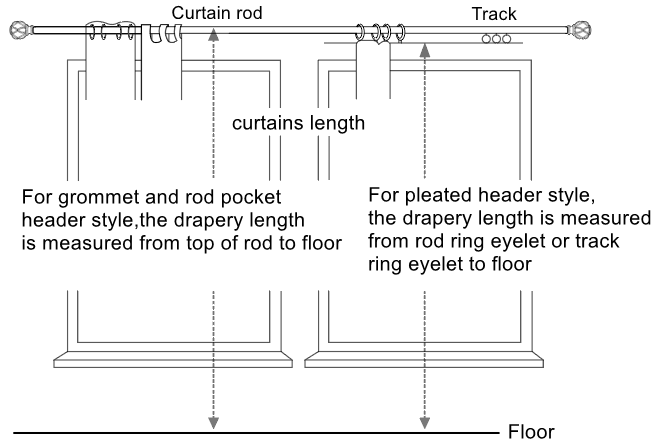
Floor-length curtains can give the bed and window a cohesive look, particularly when the headboard is low and there is room for the panels to move behind it. Measure from the actual hanging point to the intended hem position, then check that the curtain falls straight on both visible sides of the bed.
The bed may hide part of the hem, but it will not hide panels that hang unevenly or bow outward where they meet the headboard.
Sill- or Apron-Length Curtains
A shorter curtain can avoid a headboard that sits close to the wall. Its hem still needs careful placement. If it ends at almost the same height as the top of the headboard, the two horizontal lines may make the window feel cramped.
Mark the proposed hem on the wall with removable tape and view it from the doorway before ordering. When most of the window sits behind the headboard, an inside-mount treatment may be easier to reach and use than a short curtain.
Stationary Side Panels
Stationary panels can frame the window without having to travel behind the bed. They work well with a separate shade that handles privacy and morning light. Before choosing this setup, make sure the panels will not interfere with the window, bedside lamps or the route around the bed.

Give Open Curtains Somewhere to Go
The wall beside a bedroom window is often already occupied by nightstands, sconces or outlets. Open curtains need space there, too. That space is called stackback.
If the panels stack behind the headboard, their pleats may stay compressed or become difficult to straighten. If they stack over a bedside lamp, they may be awkward to operate. Ideally, the curtains gather in neat, compact vertical folds outside the window frame, leaving most of the glass visible during the day.
Our curtain stackback guide explains how panel width, header style and fabric affect the space you need. If one side of the bed has much more free wall than the other, a one-way draw may be worth considering, but that side must hold the full stack of fabric.

Find the Light Gap Before Choosing the Lining
A heavier fabric will not fix every light problem. In a bedroom, early light may enter above the curtains, along the outer edges, where two panels meet, or through the section that cannot close properly behind the headboard.
Look at the window at the time the light bothers you. If it comes from the sides, check the rod or track width and the curtains’ finished coverage. If it comes through the middle, check whether the panels meet fully when closed. If the headboard stops the panels from moving, solve that obstruction first; adding a thicker lining will not help a curtain that cannot reach its closed position.
For a darker bedroom, compare blackout curtains and the options in our lining guide. Room darkening and blackout describe different levels of light control, and the finished result also depends on the gaps around the installation.
Measure With the Bed in Its Final Position
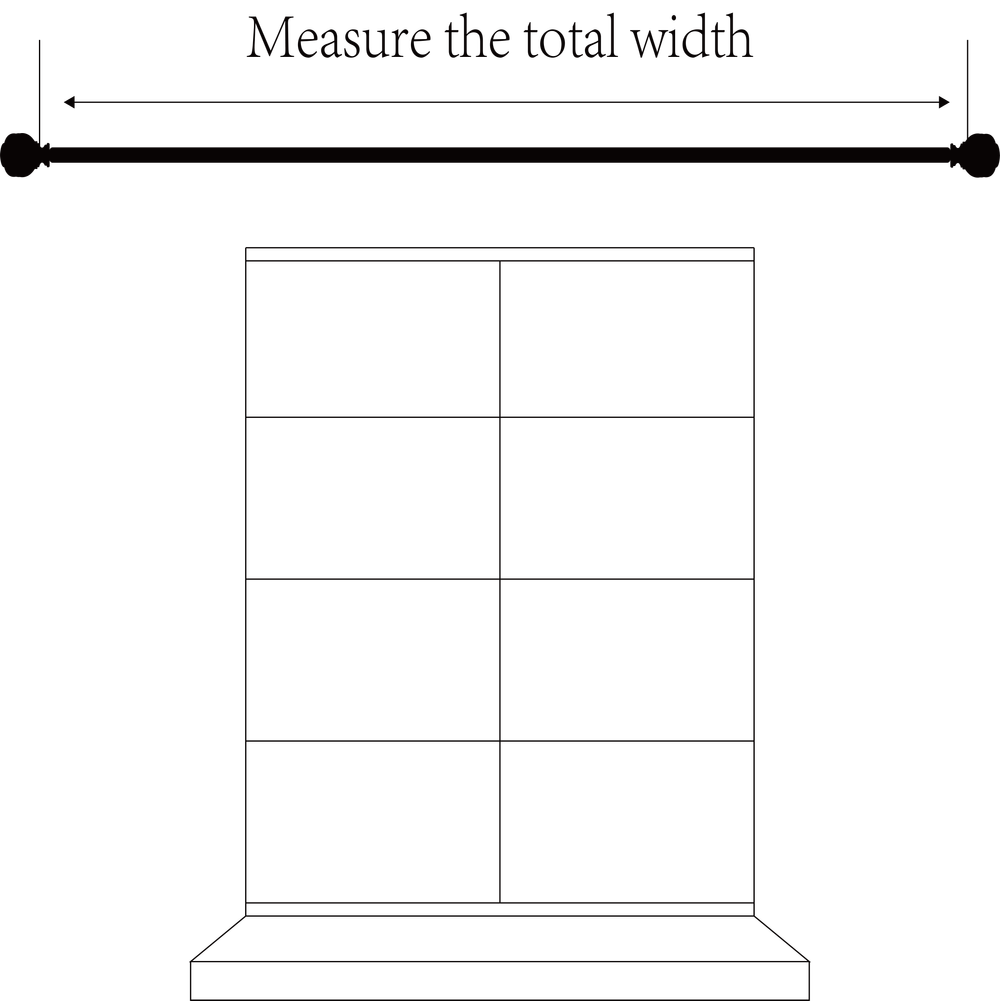
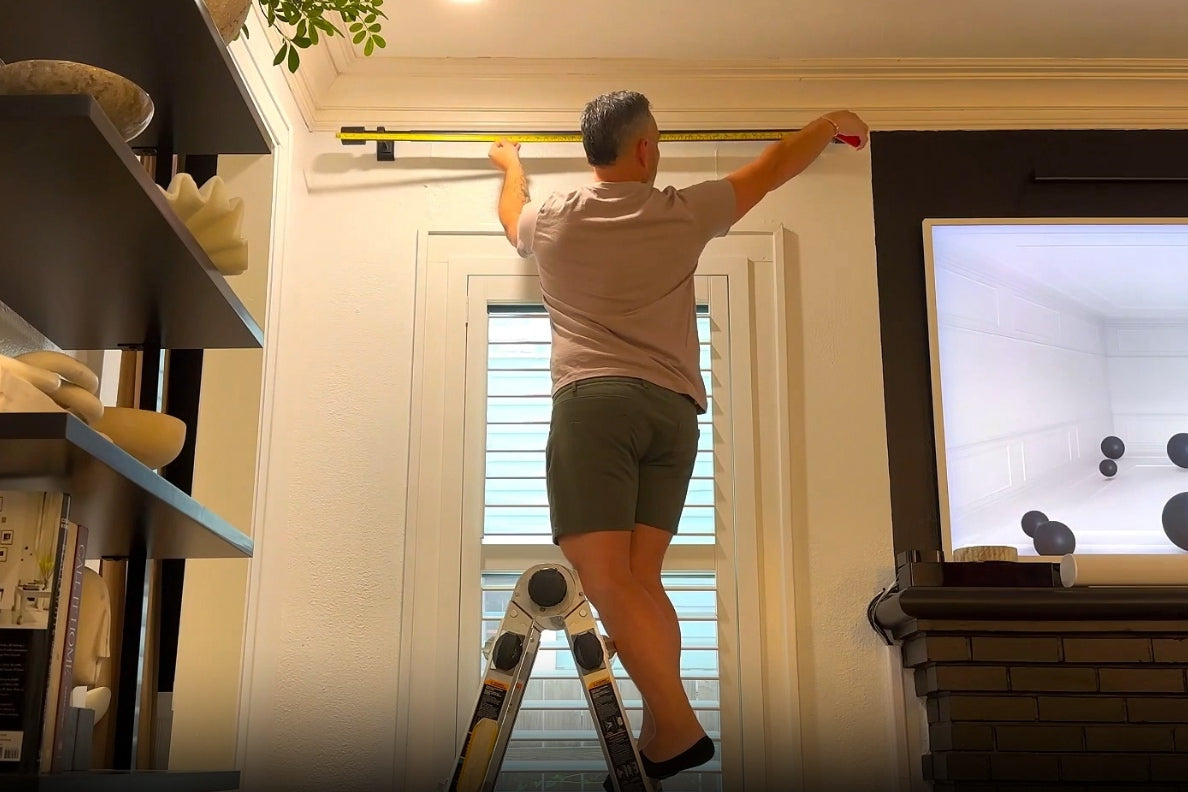
Record the window-frame dimensions and the proposed rod or track width. Then measure from the actual hanging point to your intended hem. Note the height and depth of the headboard, the space behind it, and the clear wall on both sides where open curtains could stack.
Also mark bedside lights, outlets, vents and window handles. In an older room, check the drop at the left, center and right rather than assuming the floor and window are perfectly level.
Once the bed and hardware positions are settled, use the IXACurtians Measurement Guide and Measurement Finder to review your ordering dimensions. Moving the bed after ordering can change a workable curtain plan into one that catches every time it is closed.
Choose a Setup You Will Actually Use
A low headboard with space behind it may allow a conventional pair of working curtains. A bed pressed close to the window may be better served by an inside-mount treatment and stationary side panels. Neither arrangement is inherently better; the right one is the one you can open in the morning and close at night without shifting the furniture.
In a bedroom used by young children, check for accessible window-covering cords as well. The Window Covering Safety Council recommends cordless window treatments in homes with infants and young children.
Make the Window Work With the Bed
A window behind the bed does not have to disappear behind fabric. The goal is to give the headboard, the curtains and the window enough room to do their jobs: let daylight in when the panels are open, close comfortably at night, and keep fabric from being caught by the bed.
IXACurtians custom curtains can be made around your planned hardware width, header, fabric and lining. For a bedroom that calls for the weight and texture of velvet, Aushme room-darkening curtains are one option. If minimizing morning light is the priority, plan the lining and installation details alongside the fabric.
FAQs
Can I put floor-length curtains behind a bed?
Yes, if they can hang straight and move freely behind the headboard. If the bed traps the fabric against the wall, move the bed forward or choose another window-treatment layout.
Should curtains touch the headboard?
The important question is whether they are being pressed, snagged or pulled out of line. Check the curtains while opening and closing them, not only when they are hanging still.
Are short curtains better behind a bed?
Sometimes. They can avoid a tight space behind the headboard, but their hem needs to look intentional. Compare the result with an inside-mount treatment before choosing a length.
How do I block light from a window behind my bed?
Identify whether light is entering at the top, sides or center of the curtains. Then address coverage, hardware position and lining. If the headboard prevents the panels from closing, fix that first.
Can I use decorative curtains with a shade?
Yes. The shade can handle daily privacy and light control while stationary curtains frame the window. Check that neither treatment obstructs the window or bedside area.